Stonehenge

Definition and stakes

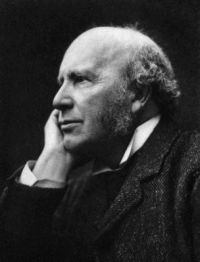
Portrait of Ralph Waldo Emerson Ralph Waldo Emerson,  English Traits — Stonehenge (1856)

“ Some diligent Fellowes or Layard will arrive, stone by stone, at the whole history, by that exhaustive British sense and perseverance, so whimsical in its choice of objects, which leaves its own Stonehenge or Choir Gaur to the rabbits, whilst it opens pyramids, and uncovers Nineveh. Stonehenge, in virtue of the simplicity of its plan, and its good preservation, is as if new and recent; and, a thousand years hence, men will thank this age for the accurate history it will yet eliminate. ”
Source: Wikisource

Augusta J. Evans,  Vashti; Or, Until Death Us Do Part

“ It was a dreary plain, dotted with the “fallen cromlechs of Stonehenge,” and in front of the desecrated stone altars 288 stood a veiled woman, with her hands clasped over a silver crescent-curved knife, and her bare feet resting on oaken chaplets and mistletoe boughs, starred and fringed with snowy flowers. Under the dexterously painted gauze that shrouded the face, the outline of the features was distinctly traceable, end behind the film,—large, oracular, yet mournful eyes, burned like setting stars, seen through magnifying vapors that wreathe the horizon. ”
Source: Gutenberg

T. Rice Holmes,  Ancient Britain and the Invasions of Julius Caesar

“ For him it is enough that Stonehenge was the work of men who felt the majesty of death, and for whom no toil was too great that could do honour to the dead. Chronology has little interest for him: whether Stonehenge was built to hallow the vast necropolis in which it stands, or the dead were brought from afar to lie beneath its shadow, he knows that the three hundred barrows and the great monument are indissolubly connected. The moment when he descried the grey weather-beaten stones on the lonely Wiltshire upland will not fade from his mind. ”
Source: Gutenberg

Get perspective with Kwize: daily news enlightened by great literature