Summary

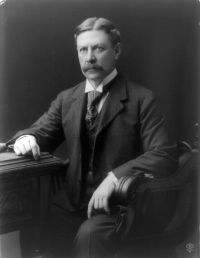
Portrait of William Henry Moody William Henry Moody Atchison Topeka Santa Fe Railway Company v…

No amount of human foresight which could reasonably be exacted as a duty could anticipate that a passenger, after the train had started, would run a distance of from 75 to 100 feet with the purpose of boarding a train moving with increasing rapidity; much less that a person would take a helpless infant, and, while thus running, attempt to place it on the train. We are of the opinion that the railroad was not bound to foresee and guard against such extraordinary conduct, and that its failure to do so was not negligence.
Source: Wikisource

Portrait of William Henry Moody William Henry Moody Atchison Topeka Santa Fe Railway Company v…

It becomes necessary, therefore, to inquire whether the defendant was negligent in leaving the truck there. But, even where the highest degree of care is demanded, still the one from whom it is due is bound to guard only against those occurrences which can reasonably be anticipated by the utmost foresight. It has been well said that, 'if men went about to guard themselves against every risk to themselves or others which might, by ingenious conjecture, be conceived as possible, human affairs could not be carried on at all.
Source: Wikisource

Portrait of William Henry Moody William Henry Moody Atchison Topeka Santa Fe Railway Company v…

Nevertheless, a careless person is liable for all the natural and probable consequences of his misconduct. If the misconduct is of a character which, according to the usual experience of mankind, is calculated to invite or induce the intervention of some subsequent cause, the intervening cause will not excuse him, and the subsequent mischief will be held to be the result of the original misconduct.
Source: Wikisource

Get perspective with Kwize: daily news enlightened by great literature