Summary

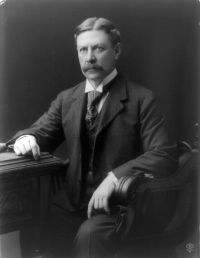
Portrait of William Henry Moody William Henry Moody Cunningham v. Springer — Opinion of the Court

The plaintiffs' contention was that he agreed upon $500 as his compensation for the trial of the case in the district court and the supreme court of the territory, and that for all subsequent services he was entitled to be paid a reasonable compensation. In the charge to the jury these conflicting contentions were clearly submitted for determination. The jury were instructed that if, as the defendants asserted, Jones had agreed to give his services throughout the entire litigation for $500, and that that $500 had been paid to him, that the verdict should be for the defendants.
Source: Wikisource

Portrait of William Henry Moody William Henry Moody Cunningham v. Springer — Opinion of the Court

But, so far as the plaintiffs were entitled to this instruction, it was given to the jury by instruction 14. A judge is not bound to charge the jury in the exact words proposed to him by counsel. The form of expression may be his own. If he instructs the jury correctly and in substance covers the relevant rules of law proposed to him by counsel, there is no error in refusing to adopt the exact words of the request.
Source: Wikisource

Portrait of William Henry Moody William Henry Moody Cunningham v. Springer — Opinion of the Court

In this case the burden of proof is on the plaintiffs as to every issue, except that of payment, as to which issue the burden of proof is upon the defendants. In order to entitle the plaintiffs to recover in this case they must establish every such issue, with the exception aforesaid, by a preponderance of the evidence; and if you find that the evidence bearing upon the plaintiffs' case is evenly balanced, or that it preponderates in favor of the defendants, then the plaintiffs cannot recover, and you should find for the defendants.'
'Now, gentlemen, I will withdraw instruction No.
Source: Wikisource

Get perspective with Kwize: daily news enlightened by great literature