Summary

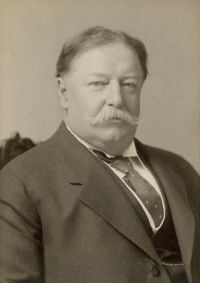
Portrait of William Howard Taft William Howard Taft Cincinnati Company v. Indianapolis Union Railway Company…

It says that, as the Circuit Court of Appeals has held that its attempted election was invalid and ineffective for the purpose, it should have equitable relief from the oppressive obligation to pay two-thirteenths on the ground of its mistake and be permitted to make an election which will relieve it from the contract to pay any rental at all, as it might have done when it became the purchaser. Such a proceeding is certainly anocillary to the enforcement of the decree of sale and the contract of purchase.
Source: Wikisource

Portrait of William Howard Taft William Howard Taft Cincinnati Company v. Indianapolis Union Railway Company…

On the hearing of the petition to which the Indianapolis Union Railway Company and the other defendants filed answers, the District Court held that the delay of two years between the coming down of the decree from the Circuit Court of Appeals in 1922 until 1924, when the petition was filed, was a delay constituting acquiescence which would prevent the consideration of the petition.
Source: Wikisource

Portrait of William Howard Taft William Howard Taft Cincinnati Company v. Indianapolis Union Railway Company…

When, however, the decrees were made in the foreclosure of the two parts of the railway, the purchasing company, the appellant here, sought to reduce its rental from two-thirteenths to one-thirteenth, by electing to take the contract for rental of its predecessor in title of the eastern part of the united railway, and to refuse to elect to take the contract of rental of its predecessor in title for the western part of the railway, and, having filed such an election, it declined to pay more than one-thirteenth of the rental.
Source: Wikisource

Get perspective with Kwize: daily news enlightened by great literature