Summary

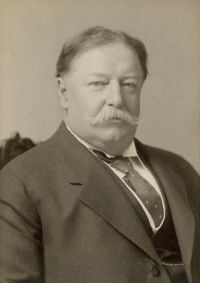
Portrait of William Howard Taft William Howard Taft Segurola v. United States — Opinion of the Court

In other words, in order to raise the question of illegal seizure, and an absence of probable cause in that seizure, the defendants should have moved to have the whisky and other liquor returned to them as their property and as not subject to seizure to use as evidence. To preserve their rights under the Fourth Amendment, they must at least have seasonably objected to the production of the liquor in court.
Source: Wikisource

Portrait of William Howard Taft William Howard Taft Segurola v. United States — Opinion of the Court

The questions which have been chiefly argued here are, first, the correctness of the refusal of the court to allow the police officer to be cross-examined as to the name of the person who communicated to him the information that the defendants were engaged in transporting liquor in a Buick car; and, second, the question of the existence of probable cause to justify the seizure of the automobile under the circumstances shown.
Source: Wikisource

Portrait of William Howard Taft William Howard Taft Segurola v. United States — Opinion of the Court

As a matter of fact, the petitioners, when attended by counsel, waived a reading of the information and pleaded not guilty, which was an indication that they already knew what the information was and that they really suffered no prejudice which would justify a new trial. We agree with the Circuit Court of Appeals in its conclusion that in any view the error was a harmless one.
Source: Wikisource

Get perspective with Kwize: daily news enlightened by great literature