Summary

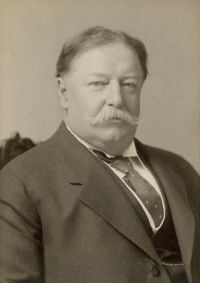
Portrait of William Howard Taft William Howard Taft Sutter Butte Canal Company v. Railroad Commission of California…

As the contract was necessarily made in view of the power of the commission to change its terms to avoid discrimination in dealing with the consumers of water of a public utility, it is very difficult to see why the situation may not be reduced to a uniform one under the power of the commission, if that body deems it equitable and fair to do so in the interest of the public.
Source: Wikisource

Portrait of William Howard Taft William Howard Taft Sutter Butte Canal Company v. Railroad Commission of California…

In this case it was held that the power of Congress to regulate commerce among the states, which is analogous to the police power of the states in regulating public utilities, extended to rendering impossible enforcement of contracts made between carriers and shippers, although valid when made, because they were all made subject to the possibility that, even if valid when made, Congress might by exercising its power, render them invalid.
Source: Wikisource

Portrait of William Howard Taft William Howard Taft Sutter Butte Canal Company v. Railroad Commission of California…

The findings and conclusions of the commission on questions of fact shall be final and shall not be subject to review. Such questions of fact shall include ultimate facts and the findings and conclusions of the commission on reasonableness and discrimination. The commission and each party to the action or proceeding before the commission shall have the right to appear in the review proceeding, and upon the hearing the Supreme Court shall render judgment either affirming or setting aside the order or decision of the commission.
Source: Wikisource

Get perspective with Kwize: daily news enlightened by great literature