Summary

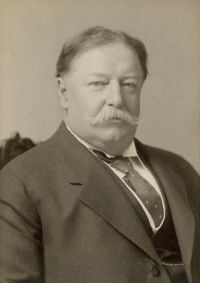
Portrait of William Howard Taft William Howard Taft United States v. Rider (261 U.S. 363…

It is true that the Act of May 12, 1917, gives the Secretary of War the authority to pay civilians in training for reserve commissions $100 a month, but by the Act of July 9, 1918, no funds are appropriated to enable him to order such pay, and, as a matter of fact, after June 30, 1918, no such pay was allowed to civilians training for commissions.
Source: Wikisource

Portrait of William Howard Taft William Howard Taft United States v. Rider (261 U.S. 363…

This increased the pay to $100 on a level with that of civilians engaged in the same duty and training. Such civilians, if any, were not entitled to 50 per cent. increase for flight duty. Why should it be assumed, therefore, that it was intended to pay these enlisted men $50 more a month than civilians in a statute plainly designed to secure uniformity? But it is said that this is to repeal the act of 1914 giving additional pay for flight duty to enlisted men, and repeals by implication are not favored.
Source: Wikisource

Portrait of William Howard Taft William Howard Taft United States v. Rider (261 U.S. 363…

That act put the temporarily enlisted men in the Signal and Aviation Corps on the same footing as to pay, allowances and pensions as enlisted men of the same grade in the regular army, made an appropriation of $640,000,000 for the purposes of the act and provided that enlisted men of the aviation section of the Signal Corps should be paid from funds transferred to their credit from Signal Corps appropriations.
Source: Wikisource

Get perspective with Kwize: daily news enlightened by great literature