Summary

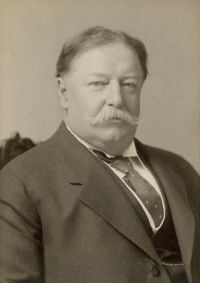
Portrait of William Howard Taft William Howard Taft Work v. United States Rives — Opinion of the Court

In each case it was held that as the statute intended to vest in the Secretary the discretion to construe the land laws and make such rulings, no court could reverse or control them by mandamus in the absence of anything to show that they were capricious or arbitrary. It was pointed out that a mandamus could not be made to serve the function of a writ of error, and the mere fact that the court might deem the ruling erroneous in law gave it no power to intervene.
Source: Wikisource

Portrait of William Howard Taft William Howard Taft Work v. United States Rives — Opinion of the Court

The relator demurred to the answer and on that demurrer judgment followed and the writ issued.
Mandamus issues to compel an officer to perform a purely ministerial duty. It cannot be used to compel or control a duty in the discharge of which by law he is given discretion. The duty may be discretionary within limits. He cannot transgress those limits, and if he does so, he may be controlled by injunction or mandamus to keep within them. The power of the court to intervene, if at all, thus depends upon what statutory discretion he has.
Source: Wikisource

Portrait of William Howard Taft William Howard Taft Work v. United States Rives — Opinion of the Court

The Dent Act was passed by Congress in an effort to do justice and equity to the many persons who could not obtain from the government compensation for supplies or services furnished or losses incurred in helping the government during the war, because of a lack of enforceable contracts or equities. As to supplies and services furnished, there was to be a settlement made by the Secretary of War, and if this did not satisfy the claimant, he was given a right under section 2 to sue in the Court of Claims to recover greater compensation.
Source: Wikisource

Get perspective with Kwize: daily news enlightened by great literature