Summary

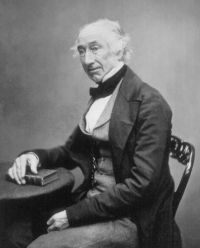
Portrait of William Jackson Hooker William Jackson Hooker Curtis's Botanical Magazine, Volume LXIII…

In our conservatories, where, accord-
ing to Hortus Kewensis, it has been an inhabitant since the
year 1803, it usually puts forth its oval heads of flowers in
March; and continuing its blossoms during the two suc-
ceeding months, is a most desirable plant for greenhouse
cultivation among other compatriots in our possession from
the sterile shores of South-western Australia–a locality, so
desert-like in aspect, yet so rich in the rarer and more
diversiformed species of the great and splendid family to
which our plant belongs.
Source: Wikisource

Portrait of William Jackson Hooker William Jackson Hooker Curtis's Botanical Magazine, Volume LXIII…

Knightia excelsa, a large
tree, often to be seen from sixty to eighty feet in height, in
the drier forests. This observation of the bare existance of
an Order on those Islands, so abundant in the neighbouring
continent of Australia, is more remarkable, since in the
southern latitudes of this latter vast country, (in which is
included Van Diemen's Land,) and in the same parallels in
South America, which also intersect New Zealand, Emboth-
rium as limited by Mr Brown, and Lomatia of the same
very eminent botanist, furnish several species
Source: Wikisource

Portrait of William Jackson Hooker William Jackson Hooker Curtis's Botanical Magazine, Volume LXIII…

Islands dictum; et in montosis sylvaticis viciniâ oppidulum Wangaroa,
(altitudine supra oceanum 1000 circiter pedun) ; nec non in sylva
primæva, (" Great Forest" dicta) versus flumen Hokianga; alibique
inter pagulos Indicos Wytangy et Keri-Keri, in nemoribus.
Lecta cum fructibus immaturis mense Novembri, et verosimiliter in
mensibus Septembri, Octobrique, florens. 1826. All. Cunn. 1833.
b. Rich. Cunningham.
Source: Wikisource

Get perspective with Kwize: daily news enlightened by great literature