“ Oh, say my wife!” “Yes, your wife, Pierre! Your true and loving wife forever.” “Forever! Yes. Love like ours is imperishable as the essence of the soul itself, and partakes of the immortality of God, being of him and from him. The Lady de Tilly shall find me a worthy son, and Le Gardeur a true and faithful brother.” “And you, Pierre! Oh, say it; that blessed word has not sounded yet in my ear—what shall I call you?” And she looked in his eyes, drawing his soul from its inmost depths by the magnetism of her look. “Your husband,—your true and loving husband, as you are my wife, Amélie.” ”
Summary
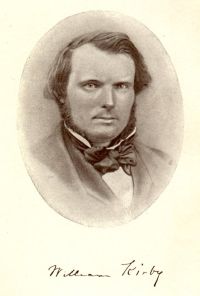
William Kirby’s The Golden Dog (1877), a historical novel grounded in the colonial period of Quebec, weaves together two narratives centered on Angélique de Méloizes, Madame de Péan, and Colonel Pierre Philibert, a merchant’s son, against the backdrop of New France’s socio-political struggles. Drawing from James MacPherson Le Moine’s works, Kirby’s story delves into themes of familial obligation, ethical dilemmas, and the lasting impact of the Grand Company and the Manor House, set amid the intricacies of 18th-century Quebec.
Despite its rich historical texture and complex character relationships—marked by betrayals, unrequited affection, and secret machinations—the novel’s author was deprived of royalties due to the publisher’s failure to register the work, highlighting the uncertain destiny of literary efforts in the 19th century.
Quotes from The Golden Dog (William Kirby)
“ I said not now but when you please, Angélique! You are worth a man's waiting his life for!” “No, Le Gardeur!” she replied, “I am not worth your waiting for; it cannot be, as I once hoped it might be; but love you I do and ever shall!” and the false, fair woman kissed him fatuously. “I love you, Le Gardeur, but I will not marry you!” “You do not surely mean it, Angélique!” exclaimed he; “you will not give me death instead of life? You cannot be so false to your own heart, so cruel to mine? See, Angélique! ”
“ My object, dear sister, is like yours: to spend my life in prayers and supplications for Le Gardeur, and be laid, when God calls me to his rest, by the side of our noble aunt, Mère Madelaine de Repentigny, whose lamp still burns in the Chapel of the Saints, as if to light you and me to follow in her footsteps.” “It is for Le Gardeur's sake I too go,” replied Amélie; “to veil my face from the eyes of a world I am ashamed to see, and to expiate, if I can, the innocent blood that has been shed. But the sun shines very bright for those to whom its beams are still pleasant!” ”
“ His heart is bleeding to death with this dreadful sword-stroke of Le Gardeur's,” said the Lady de Tilly, after waiting till she recovered somewhat. “And will he not slay Le Gardeur? Will he not deem it his duty to kill my brother and his?” cried she. “He is a soldier and must!” “Listen, Amélie. There is a divinity in Pierre that we see only in the noblest of men; he will not slay Le Gardeur. He is his brother and yours, and will regard him as such. Whatever he might have done in the first impulse of anger, Pierre will not now seek the life of Le Gardeur. ”
“ Let this vial of Brinvilliers bring me the good fortune I crave, and I will fill your lap with gold. If the lady of Beaumanoir shall find death in a bouquet of flowers, let them be roses!” “But how and where to find roses? they have ceased blooming,” said La Corriveau, hating Angélique's sentiment, and glad to find an objection to it. “Not for her, La Corriveau; fate is kinder than you think!” Angélique threw back a rich curtain and disclosed a recess filled with pots of blooming roses and flowers of various hues. “The roses are blooming here which will form the bouquet of Beaumanoir.” ”
“ There is a lady, a real lady if I ever saw one, living in the Château here in the greatest privacy. I and the Intendant only see her. She is beautiful and full of sorrow as the picture of the blessed Madonna. What she is, I may guess; but who she is, I cannot conjecture, and would give my little finger to know!” “Tut, dame!” replied Mère Malheur, with a touch of confidence, “I will not believe any woman could keep a secret from you! But this is news, indeed, you tell me! A lady in concealment here, and you say you cannot find her out, Dame Tremblay!” ”
“ Angélique felt that with all her acuteness she did not comprehend the Intendant. “You ask what I think of the Intendant?” asked he, surprised somewhat at the question. “Yes—an odd question, is it not, Le Gardeur?” and she smiled away any surprise he experienced. “Truly, I think him the most jovial gentleman that ever was in New France,” was the reply; “frank and open-handed to his friends, laughing and dangerous to his foes. His wit is like his wine, Angélique: one never tires of either, and no lavishness exhausts it. ”
“ Angélique fell into a deep fit of musing, and murmured to herself, “I shall never reach Bigot unless she be removed—but how to remove her?” Ay, that was the riddle of the Sphinx! Angélique's life, as she had projected it, depended upon the answer to that question. She trembled with a new feeling; a shiver ran through her veins as if the cold breath of a spirit of evil had passed over her. A miner, boring down into the earth, strikes a hidden stone that brings him to a dead stand. So Angélique struck a hard, dark thought far down in the depths of her secret soul. ”
“ People look dead sometimes and are not! Tell me truly, and conceal nothing!” “La Corriveau does not her work by halves, Mademoiselle, neither do you; only you talk of repentance after it is done, I do not! That is all the difference! Be satisfied; the lady of Beaumanoir is dead! I made doubly sure of that, and deserve a double reward from you!” “Reward! You shall have all you crave! But what a secret between you and me!” Angélique looked at La Corriveau as if this thought now struck her for the first time. She was in this woman's power. ”
“ Oh, Amélie, Le Gardeur will tell you all if you ask him!” “And I repeat it to you, Angélique, I cannot question Le Gardeur on such a hateful topic. At any rate I need time to reflect, and will pray to be guided right.” “Oh, pray not at all! If you pray you will never aid me! I know you will say the end is wicked and the means dishonorable. But find out I will—and speedily! It will only be the price of another dance with the Chevalier de Pean, to discover all I want. What fools men are when they believe we love them for their sakes and not for our own!” ”
“ The death or the banishment of Caroline were the only alternatives she could contemplate. “'The sweetest eyes that were ever seen'—Bigot's foolish words!” thought she; “and the influence of those eyes must be killed if Angélique des Meloises is ever to mount the lofty chariot of her ambition.” “Other women,” she thought bitterly, “would abandon greatness for love, and in the arms of a faithful lover like Le Gardeur find a compensation for the slights of the Intendant!” But Angélique was not like other women: she was born to conquer men—not to yield to them. ”
“ The cloister and the veil were all that were left to Amélie de Repentigny. “Héloise, dearest sister!” exclaimed she, “my conscience tells me I have done right, but my heart accuses me of wrong to Pierre, of falseness to my plighted vows in forsaking him; and yet, not for heaven itself would I have forsaken Pierre. Would that I were dead! Oh, what have I done, Héloise, to deserve such a chastisement as this from God?” Amélie threw her arms around the neck of Héloise, and leaning her head on her bosom, wept long and without restraint, for none saw them save God. ”
“ Poor Le Gardeur! what happiness might not be his in the love of a woman noble-minded as himself! What happiness were he yours, O darling Héloise!” She kissed her pallid cheeks, wet with tears, which lay by hers on the same pillow, and both remained silently brooding over the thoughts which spring from love and sorrow. “Happiness can never be mine, Amélie,” said Héloise, after a lapse of several minutes. “I have long feared it, now I know it. Le Gardeur loves Angélique; he is wholly hers, and not one little corner of his heart is left for poor Héloise to nestle in! ”
“ Now that Pierre Philibert was alive in the flesh,—a man, beautiful, brave, honorable, and worthy of any woman's love,—Amélie was frightened. She had not looked for that, and yet it had come upon her. And, although trembling, she was glad and proud to find she had been remembered by the brave youth, who recognized in the perfect woman the girl he had so ardently loved as a boy. Did he love her still? Woman's heart is quicker to apprehend all possibilities than man's. She had caught a look once or twice in the eyes of Pierre Philibert which thrilled the inmost fibres of her being ”
“ Oh, Angélique des Meloises! you made me draw my sword, and I knew not who it was or what I did!” “I told you, Le Gardeur, and you are angry with me. But see! hark! what a tumult is gathering; we must get out of this throng or we shall all be killed as well as the Bourgeois. Fly, Le Gardeur, fly! Go to the Palace!” “To hell sooner! Never shall the Palace see me again!” exclaimed he madly. “The people shall kill me if they will, but save yourself, Angélique. De Pean, lead her instantly away from this cursed spot, or all the blood is not spilt that will be spilt to-day. ”
“ She shall sleep on roses, La Corriveau, and you shall make her bed!” “It is a sweet death, befitting one who dies for love, or is killed by the jealousy of a dainty rival,” replied the witch; “but I like best those draughts which are most bitter and not less sure.” “The lady of Beaumanoir will not be harder to kill than Louise Gauthier,” replied Angélique, watching the glitter of the vial in the lamplight. “She is unknown even to the servants of the Château; nor will the Intendant himself dare to make public either her life or death in his house.” ”
“ Angélique shuddered, and pressed still closer to him, as if in fear. “Mère Malheur would not tell me the meaning of that star, but bade me, if a saint, to watch and wait; if a sinner, to watch and pray. What means Algol, Le Gardeur?” she half faltered. “Nothing for you, love. A fig for all the stars in the sky! Your bright eyes outshine them all in radiance, and overpower them in influence. All the music of the spheres is to me discord compared with the voice of Angélique des Meloises, whom alone I love!” ”
“ He seized her hands, and exclaimed with vehemence,—“There is a man—a rival—a more fortunate lover—behind all this, Angélique des Meloises! It is not yourself that speaks, but one that prompts you. You have given your love to another, and discarded me! Is it not so?” “I have neither discarded you, nor loved another,” Angélique equivocated. She played her soul away at this moment with the mental reservation that she had not yet done what she had resolved to do upon the first opportunity—accept the hand of the Intendant Bigot. ”
“ If the hope of what is not yet be so potent with Bigot, what will not the reality prove ere long? The annihilation of all my brilliant anticipations! I have drawn a blank in life's lottery, by the rejection of Le Gardeur for his sake! It is the hand of that shadowy babe which plucks away the words of proposal from the lips of Bigot, which gives his love to its vile mother, and leaves to me the mere ashes of his passion, words which mean nothing, which will never mean anything but insult to Angélique des Meloises, so long as that woman lives to claim the hand which but for her would be mine! ”
“ La Corriveau, observing that the gust of passion was blown over, sat down in the chair opposite Angélique, and placing one hand on the knee of her listener, as if to hold her fast, began the terrible recital. She gave Angélique a graphic, minute, and not untrue account of all she had done at Beaumanoir, dwelling with fierce unction on the marvellous and sudden effects of the aqua tofana, not sparing one detail of the beauty and innocent looks of her victim; and repeating, with a mocking laugh, the deceit she had practised upon her with regard to the bouquet as a gift from the Intendant. ”
“ I never thought of love and him together! He is not handsome, like your brother Le Gardeur, who is my beau-ideal of a man I could love; nor has the intellect and nobility of Colonel Philibert, who is my model of a heroic man. I could love such men as them. But my ambition would not be content with less than a governor or royal intendant in New France. In old France I would not put up with less than the King himself!” Angélique laughed at her own extravagance, but she believed in it all the same. Amélie, though shocked at her wildness, could not help smiling at her folly. ”
“ François Bigot is not unmindful of your sacrifices for his sake. I must return to my guests, who are clamoring for me, or rather for you, Caroline!” He kissed her cheek and turned to leave her, but she clung to his hand as if wanting to say something more ere he went. She trembled visibly as her low plaintive tones struck his ear. “François! if you would forsake the companionship of those men and purify your table of such excess, God's blessing would yet descend upon you, and the people's love follow you! It is in your power to be as good as you are great! ”
“ Her love was an empty shell that never held a kernel of real womanly care for any man. Amid the sunshine of her fancied love for Le Gardeur had come a day of eclipse for him, of fresh glory for her. The arrival of the new Intendant, Bigot, changed the current of Angélique's ambition. His high rank, his fabulous wealth, his connections with the court, and his unmarried state, fanned into a flame the secret aspirations of the proud, ambitious girl. His wit and gallantry captivated her fancy, and her vanity was full fed by being singled out as the special object of the Intendant's admiration. ”
“ Amélie replied to him slowly, but undoubtingly: “I think there are such women, Pierre,” replied she, “women who would never, even in the regions of despair, forsake the man whom they truly love, no, not for all the terrors recorded in that awful book of Dante!” “It is a blessed truth, Amélie,” replied he, eagerly; and he thought, but did not say it, “Such a woman you are; the man who gets your love gets that which neither earth nor heaven nor hell can take away.” He continued aloud, “The love of such a woman is truly given away, Amélie; no one can merit it! ”
“ Her vivid fancy, conjured up scenes of royal splendor, where, introduced by the courtly Bigot, princes and nobles would follow in her train and the smiles of majesty itself would distinguish her in the royal halls of Versailles. Angélique felt she had power to accomplish all this could she but open the way. The name of Bigot she regarded as the open sesame to all greatness. “If women rule France by a right more divine than that of kings, no woman has a better right than I!” said she, gazing into the mirror before her. “The kingdom should be mine, and death to all other pretenders! ”
“ Pray who is she? When once a woman catches a fellow by the gills, he is a dead mackerel: his fate is fixed for good or bad in this world. But who is she, Cadet?—she must be a clever one,” said Bigot, sententiously. “So she is! and she is too clever for young De Repentigny: she has got her pretty fingers in his gills, and can carry her fish to whatever market she chooses!” “Cadet! Cadet! out with it!” repeated a dozen voices. “Yes, out with it!” repeated Bigot. “We are all companions under the rose, and there are no secrets here about wine or women!” ”
“ La Corne St. Luc spoke with a depth of emotion he rarely manifested. “How was she unfortunate, godfather?” Philibert watched the cheek flush and the eyelid quiver of the fair girl as she spoke, carried away by her sympathy. His heart went with his looks. “Alas!” replied La Corne, “I would fain not answer, lest I distrust the moral government of the universe. But we are blind creatures, and God's ways are not fashioned in our ways. Let no one boast that he stands, lest he fall! We need the help of the host of Heaven to keep us upright and maintain our integrity. ”
“ Amélie clung to Philibert. She thought of Francesca da Rimini clinging to Paolo amidst the tempest of wind and the moving darkness, and uttered tremblingly the words, “Oh, Pierre! what an omen. Shall it be said of us as of them, 'Amor condusse noi ad una morte'?” (“Love has conducted us into one death.”) “God grant we may one day say so,” replied he, pressing her to his bosom, “when we have earned it by a long life of mutual love and devotion. ”
“ Bigot started up in a rage mingled with fear, not of La Corne St. Luc, but lest the secret of Caroline's concealment at Beaumanoir should become known. The furious letter of La Pompadour repressed the prompting of his audacious spirit to acknowledge the deed openly and defy the consequences, as he would have done at any less price than the loss of the favor of his powerful and jealous patroness. The broad, black gateway of a lie stood open to receive him, and angry as he was at the words of St. Luc, Bigot took refuge in it—and lied. ”
“ If the sun shone hot and fierce at noontide in the dog-days, they would enjoy the cool shade of the arbors with books and conversation; they would ride in the forest, or embark in their canoes for a row up the bright little river; there would be dinners and diversions for the day, music and dancing for the night. The spirits of the inmates of the Manor House could not help but be kept up by these expedients, and Amélie flattered herself that she would quite succeed in dissipating the gloomy thoughts which occupied the mind of Le Gardeur. ”
“ The toast suited their mood. Every one filled up his cup in honor of a beauty so universally admired. “Kneel down, all,” cried the Intendant, “or De Pean will hamstring us!” All knelt down with a clash—some of them unable to rise again. “We will drink to the Angélique charms of the fair Des Meloises. Come now, all together!—as the jolly Dutchmen of Albany say, 'Upp seys over!'” Such of the company as were able resumed their seats amid great laughter and confusion, when the Sieur Deschenaux, a reckless young gallant, ablaze with wine and excitement, stood up, leaning against the table. ”
“ You are wise, La Corriveau, you know a woman's desire better than she dare avow it to herself!” “Ah!” replied La Corriveau, returning her scrutiny with the eyes of a basilisk; a green light flashed out of their dark depths. “You have a lover, and you have a rival, too! A woman more potent than yourself, in spite of your beauty and your fascinations, has caught the eye and entangled the affections of the man you love, and you ask my counsel how to win him back and how to triumph over your rival. Is it not for that you have summoned La Corriveau?” ”
“ It is easy to recover affection that is not lost. Angélique knew her power, and was not indisposed to excess in the exercise of it. “Will you do something for me, Le Gardeur?” asked she, tapping his fingers coquettishly with her fan. “Will I not? Is there anything in earth, heaven, or hell, Angélique, I would not do for you if I only could win what I covet more than life?” “What is that?” Angélique knew full well what he coveted more than life; her own heart began to beat responsively to the passion she had kindled in his. She nestled up closer to his side. “What is that, Le Gardeur?” ”
“ But De Pean feared to impart to her his intention to push Le Gardeur blindly into the affair. She might fear for the life of one she loved. De Pean reflected angrily on this, but he determined she should be on the spot. The sight of her and a word from her, which De Pean would prompt at the critical moment, should decide Le Gardeur to attack the Bourgeois and kill him; and then, what would follow? De Pean rubbed his hands with ecstasy at the thought that Le Gardeur would inevitably bite the dust under the avenging hand of Pierre Philibert, and Angélique would be his beyond all fear of rivals. ”
“ La Corriveau spat contemptuously upon the floor at the holy name. “You are a fool, Angélique des Meloises, to speak thus to me! Do you know who and what I am? You are a poor butterfly to flutter your gay wings against La Corriveau; but still I like your spirit! women like you are rare. The blood of Exili could not have spoken bolder than you do; you want the life of a woman who has kindled the hell-fire of jealousy in your heart, and you want me to tell you how to get your revenge!” ”
“ Time and tide, which come to all once in our lives, as the poet says, and which must be taken at their flood to lead to fortune, came at length to Amélie de Repentigny. It came suddenly and in an unlooked-for hour, the great question of questions to her as to every woman. The hour of birth and the hour of death are in God's hand, but the hour when a woman, yielding to the strong enfolding arm of a man who loves her, falters forth an avowal of her love, and plights her troth, and vows to be one with him till death, God leaves that question to be decided by her own heart. ”
“ At the head of the table, first in place as in rank, sat François Bigot, Intendant of New France. His low, well-set figure, dark hair, small, keen black eyes, and swarthy features full of fire and animation, bespoke his Gascon blood. His countenance was far from comely,—nay, when in repose, even ugly and repulsive,—but his eyes were magnets that drew men's looks towards him, for in them lay the force of a powerful will and a depth and subtlety of intellect that made men fear, if they could not love him. ”
“ Despite the cold shade of a cloister, where the idea of a lover is forbidden to enter, the image of Pierre Philibert did intrude, and became inseparable from the recollection of her brother in the mind of Amélie. He mingled as the fairy prince in the day-dreams and bright imaginings of the young, poetic girl. She had vowed to pray for him to her life's end, and in pursuance of her vow added a golden bead to her chaplet to remind her of her duty in praying for the safety and happiness of Pierre Philibert. ”
“ The eager persistence of Angélique, in her demand for a lettre de cachet to banish the unfortunate Caroline, had wearied and somewhat disgusted Bigot. “I would cut the throat of any man in the world for the sake of her bright eyes,” said he to himself, as she gave him a parting salute with her handkerchief; “but she must not ask me to hurt that poor foolish girl at Beaumanoir. No, by St. Picot! she is hurt enough already, and I will not have Angélique tormenting her! What merciless creatures women are to one another, Cadet!” ”
“ The word he pleaded for hovered on her tongue, ready like a bird to leap down into his bosom; but she resolutely beat it back into its iron cage. The struggle was the old one—old as the race of man. In the losing battle between the false and true, love rarely comes out of that conflict unshorn of life or limb. Untrue to him, she was true to her selfish self. The thought of the Intendant and the glories of life opening to her closed her heart, not to the pleadings of Le Gardeur,—them she loved,—but to the granting of his prayer. ”
“ The conviction came upon Amélie like a flash of inspiration that she was wrong in seeking to save Le Gardeur by seconding his wild offer of marriage to Angélique. A union with this false and capricious woman would only make his ruin more complete and his latter end worse than the first. She would not urge it, she thought. “Angélique,” said she, “if you love Le Gardeur, you will not refuse your help to rescue him from the Palace. You cannot wish to see him degraded as a gentleman because he has been rejected by you as a lover.” ”
“ Love is a commodity only spoken of in romances or in the patois of milkmaids now-a-days!” “Zounds, Angélique! you would try the patience of all the saints in the calendar! I shall pity the fellow you take in! Here is the fairest fortune in the Colony about to fall into the hands of Pierre Philibert—whom Satan confound for his assurance! A fortune which I always regarded as my own!” “It shows the folly and vanity of your sex! You never spoke a word to Amélie de Repentigny in the way of wooing in your life! Girls like her don't drop into men's arms just for the asking.” ”
“ Amélie's tears flowed silently in the darkness. She was not willing to plant a seed of distrust in the bosom of her brother, yet she remembered bitterly and indignantly what Angélique had said of her intentions towards the Intendant. Was she using Le Gardeur as a foil to set off her attractions in the eyes of Bigot? “Brother!” said Amélie, “I am a woman, and comprehend my sex better than you. I know Angélique's far-reaching ambition and crafty ways. Are you sure, not in outward persuasion but in inward conviction, that she loves you as a woman should love the man she means to marry?” ”
“ Angélique never thought so honestly well of herself as when recounting the marks of affection bestowed upon her by Le Gardeur de Repentigny. “His love is a treasure for any woman to possess, and he has given it all to me!” said she to herself. “There are women who value themselves wholly by the value placed upon them by others; but I value others by the measure of myself. I love Le Gardeur; and what I love I do not mean to lose!” added she, with an inconsequence that fitted ill with her resolution regarding the Intendant. ”
“ But I must see this piece of perfection of yours to-morrow night, dame! The Intendant returns in two days, and he might remove her. Did she tell you about him?” “No! Bigot is a devil more powerful than the one we serve, dame. I fear him!” “Tut! I fear neither devil nor man. It was to be at the hour of twelve! Did you not say at the hour of twelve, Mère Malheur?” “Yes! go in by the vaulted passage and knock at the secret door. She will admit you. But what will you do with her, Dame Dodier? Is she doomed? Could you not be gentle with her, dame?” ”
“ The world is ruled by such dreams, dreams of impassioned hearts, and improvisations of warm lips, not by cold words linked in chains of iron sequence,—by love, not by logic. The heart with its passions, not the understanding with its reasoning, sways, in the long run, the actions of mankind. Pierre Philibert possessed that rich gift of nature, a creative imagination, in addition to the solid judgment of a man of sense, schooled by experience and used to the considerations and responsibilities of weighty affairs. His love for Amélie de Repentigny had grown in secret. ”
Common terms
Similar works
The Golden Dog — Chapter XLIII…The Golden Dog — Chapter XVII…The Golden Dog — Chapter XLVI…The Golden Dog — Chapter XXXVIII…The Golden Dog — Chapter XIX (William Kirby…The Seats of the Mighty, Complete…The Black Colonel (James Milne…The Seats of the Mighty, Volume 1…My Neighbor Raymond (Novels of Paul de Kock Volume XI)…The Grey Cloak (Harold MacGrath…
