Summary

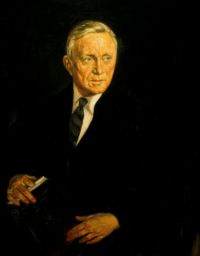
Portrait of William O. Douglas William O. Douglas Berger v. New York — Concurrence

If a statute were to authorize placing a policeman in every home or office where it was shown that there was probable cause to believe that evidence of crime would be obtained, there is little doubt that it would be struck down as a bald invasion of privacy, far worse than the general warrants prohibited by the Fourth Amendment. I can see no difference between such a statute and one authorizing electronic surveillance, which, in effect, places an invisible policeman in the home. If anything, the latter is more offensive because the homeowner is completely unaware of the invasion of privacy.
Source: Wikisource

Portrait of William O. Douglas William O. Douglas Berger v. New York — Concurrence

With all respect, my Brother BLACK misses the point of the Fourth Amendment. It does not make every search constitutional provided there is a warrant that is technically adequate. The history of the Fourth Amendment, as I have shown in my dissent in the Hayden case, makes it plain that any search in the precincts of the home for personal items that are lawfully possessed and not articles of a crime is "unreasonable." That is the essence of the "mere evidence" rule that long obtained until overruled by Hayden.
The words that a man says consciously on a radio are public property.
Source: Wikisource

Portrait of William O. Douglas William O. Douglas Berger v. New York — Concurrence

Under our regime a man stands mute if he chooses, or talks if he chooses. The test is whether he acts voluntarily. That is the essence of the face of privacy protected by the 'mere evidence' rule. For the Fourth Amendment and the Fifth come ito play when the accused is "the unwilling source of the evidence" (Gouled v. United States, 255 U.S. 298, 306, 41 S.Ct. 261, 264, 65 L.Ed. 647) , there being no difference "whether he be obliged to supply evidence against himself or whether such evidence be obtained by an illegal search of his premises and seizure of his private papers."
Source: Wikisource

Get perspective with Kwize: daily news enlightened by great literature