Summary

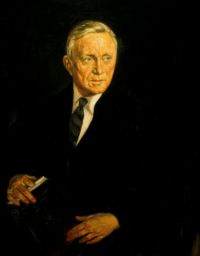
Portrait of William O. Douglas William O. Douglas Coppola v. United States — Dissent

The fact that the interrogation took place in the cell of a state police station rather than in the cell of a federal jail or prison only accentuates the evasion of the Rule. In this case the federal agents used an illegal detention as the occasion to carry on a secret interrogation. What the federal agents cannot do in federal precincts they cannot do in a state jail. What we do today is to permit federal agents to flout the federal law so long as they let the accused stay in a state jail and interrogate him there to their hearts' content.
Source: Wikisource

Portrait of William O. Douglas William O. Douglas Coppola v. United States — Dissent

Rule 5 (a) is not a formality; its purpose is to minimize secret police interrogation of persons under detention; its ultimate aim is to avoid those situations out of which grows the whole system of the 'third degree.' The evil at which the rule aims is in interrogation in secret and in detention before the arraignment. Its means are arraignment 'without unnecessary delay.' Here, the federal agents carried on the kind of interrogation against which Rule 5 (a) is aimed.
Source: Wikisource

Portrait of William O. Douglas William O. Douglas Coppola v. United States — Dissent

At four in the afternoon, about 19 hours after the federal agents had commenced their interrogation, petitioner was arraigned in the federal court. There has been much attention focused, in the progress of this case, on whether the Buffalo police and the F.B.I. had a 'working arrangement' (see Anderson v. United States, 318 U.S. 350, 356, 63 S.Ct. 599, 602) by which petitioner's detention was effected.
Source: Wikisource

Get perspective with Kwize: daily news enlightened by great literature