Summary

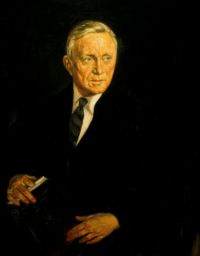
Portrait of William O. Douglas William O. Douglas Griswold v. Connecticut — Opinion of the Court (1965)

The association of people is not mentioned in the Constitution nor in the Bill of Rights. The right to educate a child in a school of the parents' choice — whether public or private or parochial — is also not mentioned. Nor is the right to study any particular subject or any foreign language. Yet the First Amendment has been construed to include certain of those rights.
Source: Wikisource

Portrait of William O. Douglas William O. Douglas Griswold v. Connecticut — Opinion of the Court (1965)

We deal with a right of privacy older than the Bill of Rights — older than our political parties, older than our school system. Marriage is a coming together for better or for worse, hopefully enduring, and intimate to the degree of being sacred. It is an association that promotes a way of life, not causes; a harmony in living, not political faiths; a bilateral loyalty, not commercial or social projects. Yet it is an association for as noble a purpose as any involved in our prior decisions.
Source: Wikisource

Portrait of William O. Douglas William O. Douglas Griswold v. Connecticut — Opinion of the Court (1965)

The right of "association," like the right of belief (Board of Education v. Barnette, 319 U.S. 624) , is more than the right to attend a meeting; it includes the right to express one's attitudes or philosophies by membership in a group or by affiliation with it or by other lawful means. Association in that context is a form of expression of opinion, and, while it is not expressly included in the First Amendment, its existence is necessary in making the express guarantees fully meaningful.
Source: Wikisource

Get perspective with Kwize: daily news enlightened by great literature