Summary

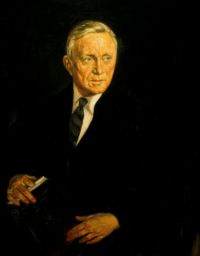
Portrait of William O. Douglas William O. Douglas Public Utilities Commission of District of Columbia v…

If liberty is to flourish, government should never be allowed to force people to listen to any radio program. The right of privacy should include the right to pick and choose from competing entertainments, competing propaganda, competing political philosophies. If people are let alone in those choices, the right of privacy will pay dividends in character and integrity. The strength of our system is in the dignity, the resourcefulness, and the independence of our people. Our confidence is in their ability as individuals to make the wisest choice.
Source: Wikisource

Portrait of William O. Douglas William O. Douglas Public Utilities Commission of District of Columbia v…

The streetcar audience is a captive audience. It is there as a matter of necessity, not of choice. One who is in a public vehicle may not of course complain of the noise of the crowd and the babble of tongues. One who enters any public place sacrifices some of his privacy. My protest is against the invasion of his privacy over and beyond the risk of travel.
Source: Wikisource

Portrait of William O. Douglas William O. Douglas Public Utilities Commission of District of Columbia v…

Liberty in the constitutional sense must mean more than freedom from unlawful governmental restraint; it must include privacy as well, if it is to be a repository of freedom. The right to be let alone is indeed the beginning of all freedom. Part of our claim to privacy is in the prohibition of the Fourth Amendment against unreasonable searches and seizures. It gives the guarantee that a man's home is his castle beyond invasion either by inquisitive or by officious people. A man loses that privacy of course when he goes upon the streets or enters public places.
Source: Wikisource

Get perspective with Kwize: daily news enlightened by great literature