Summary

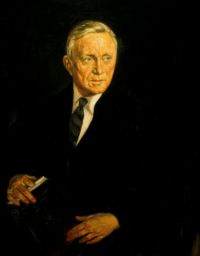
Portrait of William O. Douglas William O. Douglas Hoiness v. United States — Opinion of the Court

The concepts of residence and principal place of business obviously can have no relevance when applied to the United States. It is ubiquitous throughout the land and, unlike private parties, is not centered at one particular place. The residence or principal place of business of the libelant and the place where the vessel or cargo is found may be the best measure of the convenience of the parties. But if the United States is willing to defend in a different place, we find nothing in the Act to prevent it.
Source: Wikisource

Portrait of William O. Douglas William O. Douglas Hoiness v. United States — Opinion of the Court

The libel alleged that the United States maintains offices and principal places of business in the Northern District of California where the suit was brought, but it did not allege that petitioner was a resident of that district [4] nor that the vessel was found there at the time suit was filed. The United States did not appear specially but answered to the merits, leaving all questions of jurisdiction to the court. The District Court raised the question of jurisdiction sua sponte and, being of opinion that jurisdiction was lacking dismissed the libel.
Source: Wikisource

Portrait of William O. Douglas William O. Douglas Hoiness v. United States — Opinion of the Court

And we recently indicated that that was the correct construction of comparable provisions of § 2 of the Public Vessels Act, 43 Stat. 1112, 46 U.S.C. § 782, 46 U.S.C.A. § 782 (Canadian Aviator, Ltd., v. United States, 324 U.S. 215, 224, 65 S.Ct. 639, 644, 89 L.Ed. 901) , an act which is similar in purpose and design to the present one. See American Stevedores v.
Source: Wikisource

Get perspective with Kwize: daily news enlightened by great literature