Summary

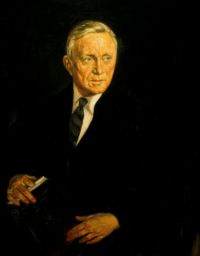
Portrait of William O. Douglas William O. Douglas Hutcheson v. United States — Dissent

When we say that the Self-Incrimination Clause of the Fifth Amendment is not applicable to the States by reason of the Fourteenth Amendment, we turn a federal proceeding into a pretrial of the state prosecution, should the witness invoke his constitutional right. Since he dare not invoke it for fear of going to a state prison, he ends up in a federal prison. The result is to turn the guarantee against self-incrimination into a sham. A witness is whipsawed between state and federal agencies, having no way to escape the federal prison unless he confesses himself into a state prison.
Source: Wikisource

Portrait of William O. Douglas William O. Douglas Hutcheson v. United States — Dissent

So, under advice of counsel, petitioner did not refuse to answer on the ground of self-incrimination. Rather, he refused to answer on the ground that the questions might 'aid the prosecution in the case in which I am under indictment and thus be in denial of due process of law.'
The power to hold in contempt a witness who refuses to testify before a congressional committee has a dual aspect. First is the power of either the House or the Senate to summon him and order him held in custody until he agrees to testify.
Source: Wikisource

Portrait of William O. Douglas William O. Douglas Hutcheson v. United States — Dissent

The federal courts do not sit as pushbutton mechanisms to fine or imprison those whom Congress refers to the United States Attorney for prosecution.
There is, for example, the case where no quorum of the congressional committee is present when the witness is charged with contempt. As said in Christoffel v. United States, 338 U.S. 84, 90, 69 S.Ct. 1447, 1450, 93 L.Ed. 1826, 'This not only seems to us contrary to the rules and practice of the Congress but denies petitioner a fundamental right.
Source: Wikisource

Get perspective with Kwize: daily news enlightened by great literature