Summary

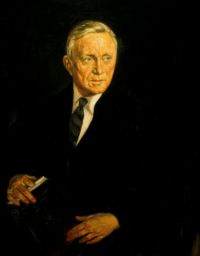
Portrait of William O. Douglas William O. Douglas In re Ruffalo — Opinion of the Court

He was Orlando, a night-shift car inspector for the Baltimore & Ohio Railroad Co. There was no evidence that Orlando ever investigated a case in the yard where he worked as inspector. There was no evidence that he ever investigated on company time. Orlando had no access to confidential information; and there was no claim he ever revealed secret matters or breached any trust. It is clear from the record that petitioner chose a railroad man to help him investigate those claims because Orlando knew railroading.
Source: Wikisource

Portrait of William O. Douglas William O. Douglas In re Ruffalo — Opinion of the Court

The Court of Appeals stated:
'We do not find in the record of the state proceedings, 'Such an infirmity of proof as to the facts found to have established the want of * * * (Ruffalo's) fair private and professional character' to lead us to a conviction that we cannot, consistent with our duty, 'accept as final the conclusion' of the Supreme Court and the Ohio bar.' Id., at 453.
We turn then to the question whether in Ohio's procedure there was any lack of due process.
Disbarment, designed to protect the public, is a punishment or penalty imposed on the lawyer.
Source: Wikisource

Portrait of William O. Douglas William O. Douglas In re Ruffalo — Opinion of the Court

In the present case petitioner had no notice that his employment of Orlando would be considered a disbarment offense until after both he and Orlando had testified at length on all the material facts pertaining to this phase of the case. As Judge Edwards, dissenting below, said, 'Such procedral violation of due process would never pass muster in any normal civil or criminal litigation.' [3] 370 F.2d, at 462.
Source: Wikisource

Get perspective with Kwize: daily news enlightened by great literature