Summary

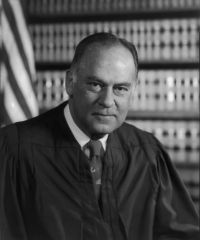
Portrait of Potter Stewart Potter Stewart Harrison v. United States (392 U.S. 219…

Here, however, the petitioner testified only after the Government had illegally introduced into evidence three confessions, all wrongfully obtained, [6] and the same principle that prohibits the use of confessions so procured also prohibits the use of any testimony impelled thereby-the fruit of the poisonous tree, to invoke a time-worn metaphor. For the 'essence of a provision forbidding the acquisition of evidence in a certain way is that not merely evidence so acquired shall not be used before the Court but that it shall not be used at all.' Silverthorne Lumber Co.
Source: Wikisource

Portrait of Potter Stewart Potter Stewart Harrison v. United States (392 U.S. 219…

A defendant who chooses to testify waives his privilege against compulsory self-incrimination with respect to the testimony he gives, and that waiver is no less effective or complete because the defendant may have been motivated to take the witness stand in the first place only by reason of the strength of the lawful evidence adduced against him.
Source: Wikisource

Portrait of Potter Stewart Potter Stewart Harrison v. United States (392 U.S. 219…

At that trial the prosecution introduced three confessions allegedly made by the petitioner while he was in the custody of the police. After these confessions had been admitted in evidence, the petitioner took the witness stand and testified to his own version of the events leading to the victim's death. The jury found the petitioner guilty, but the Court of Appeals reversed his conviction, holding that the petitioner's confessions had been illegally obtained and were therefore inadmissible in evidence against him. Harrison v. United States, 123 U.S.App.D.C. 230, 238, 359 F.2d 214, 222
Source: Wikisource

Get perspective with Kwize: daily news enlightened by great literature