Summary

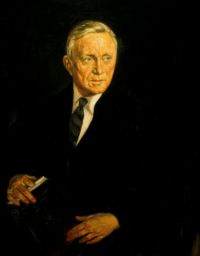
Portrait of William O. Douglas William O. Douglas Russell v. United States (369 U.S. 749…

Whenever it is used to ferret out the ideology of those collecting news or writing articles or editorials for the press, it is used unconstitutionally. The theory of our Free Society is that government must be neutral when it comes to the press-whether it be rightist or leftist, orthodox or unorthodox. The theory is that in a community where men's minds are free, all shades of opinion must be immune from governmental inquiry lest we end with regimentation. Congress has no more authority in the field of the press than it does where the pulpit is involved.
Source: Wikisource

Portrait of William O. Douglas William O. Douglas Russell v. United States (369 U.S. 749…

Congress has no power to legislate either on 'religion' or on the 'press.' If an editor or a minister violates the law, he can be prosecuted. But the investigative power, as I read our Constitution, is barred from certain areas by the First Amendment. If we took the step urged by the prosecution, we would allow Congress to enter the forbidden domain.
The strength of the 'press' and the 'church' is in their freedom. If they pervert or misuse their power, informed opinion will in time render the verdict against them. A paper or pulpit might conceivably become a mouthpiece for Communist ideology.
Source: Wikisource

Portrait of William O. Douglas William O. Douglas Russell v. United States (369 U.S. 749…

The argument is not only that discussed and interrogated administration is the only pure and efficient administration, but, more than that, that the only really self-governing people is that people which discusses and interrogates its adminstration. The talk on the part of Congress which we sometimes justly condemn is the profitless squabble of words over frivolous bills or selfish party issues.
Source: Wikisource

Get perspective with Kwize: daily news enlightened by great literature