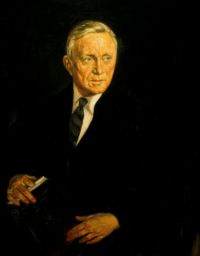
 William O. Douglas,
Southern Railway Company v. United States…
William O. Douglas,
Southern Railway Company v. United States…
“ The records show that the privilege of obtaining the benefit of rates on land-grant routes is a valuable privilege indeed. [6] We cannot assume that the United States intended to surrender any of those benefits by granting the equalizing carriers more favorable rates than those to which it was lawfully entitled on the land-grant routes, unless the purpose to do so was plainly expressed. It must be remembered that the equalization agreement was a rate-making agreement. Its object was to divert shipments to the non-land-grant route. ”
