Summary

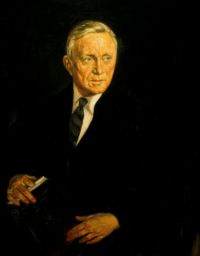
Portrait of William O. Douglas William O. Douglas United States v. Matlock — Dissenting Opinion

Graff's permission to the police to invade the house, simultaneously violating the privacy of Matlock and the Marshalls, provides a sorry and wholly inadequate substitute for the protections which inhere in a judicially granted warrant. It is inconceivable that a search conducted without a warrant can give more authority than a search conducted with a warrant.
Source: Wikisource

Portrait of William O. Douglas William O. Douglas United States v. Matlock — Dissenting Opinion

The point of the Fourth Amendment, which often is not grasped by zealous officers, is not that it denies law enforcement the support of the usual inferences which reasonable men draw from evidence. Its protection consists in requiring that those inferences be drawn by a neutral and detached magistrate instead of being judged by the officer engaged in the often competitive enterprise of ferreting out crime. . . . Crime, even in the privacy of one's own quarters, is, of course, of grave concern to society, and the law allows such crime to be reached on proper showing.
Source: Wikisource

Portrait of William O. Douglas William O. Douglas United States v. Matlock — Dissenting Opinion

The right of officers to thrust themselves into a home is also a grave concern, not only to the individual but to a society which chooses to dwell in reasonable security and freedom from surveillance. When the right of privacy must reasonably yield to the right of search is, as a rule, to be decided by a judicial officer, [p185] not by a policeman or government enforcement agent.
Source: Wikisource

Get perspective with Kwize: daily news enlightened by great literature