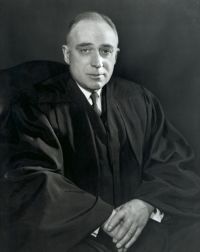
John Marshall Harlan II

John Marshall Harlan II

Summary

Portrait of John Marshall Harlan II John Marshall Harlan II Chambers v. Maroney — Concurrence

In sustaining the search of the automobile I believe the Court ignores the framework of our past decisions circumscribing the scope of permissible search without a warrant. The Court has long read the Fourth Amendment's proscription of 'unreasonable' searches as imposing a general principle that a search without a warrant is not justified by the mere knowledge by the searching officers of facts showing probable cause.
Source: Wikisource

Portrait of John Marshall Harlan II John Marshall Harlan II Chambers v. Maroney — Concurrence

To be sure, one can conceive of instances in which the occupant, having nothing to hide and lacking concern for the privacy of the automobile, would be more deeply offended by a temporary immobilization of his vehicle than by a prompt search of it. However, such a person always remains free to consent to an immediate search, thus avoiding any delay. Where consent is not forthcoming, the occupants of the car have an interest in privacy that is protected by the Fourth Amendment even where the circumstances justify a temporary seizure.
Source: Wikisource

Portrait of John Marshall Harlan II John Marshall Harlan II Chambers v. Maroney — Concurrence

The Court concedes that the police could prevent removal of the evidence by temporarily seizing the car for the time necessary to obtain a warrant. It does not dispute that such a course would fully protect the interests of effective law enforcement; rather it states that whether temporary seizure is a 'lesser' intrusion than warrantless search 'is itself a debatable question and the answer may depend on a variety of circumstances.' Ante, at 51-52. [8] I believe it clear that a warrantless search involves the greater sacrifice of Fourth Amendment values.
Source: Wikisource

Get perspective with Kwize: daily news enlightened by great literature