Summary

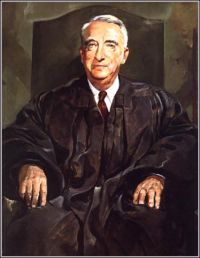
Portrait of Fred M. Vinson Fred M. Vinson Harris v. United States (331 U.S. 145…

This Court has frequently recognized the distinction between merely evidentiary materials, on the one hand, which may not be seized either under the authority of a search warrant or during the course of a search incident to arrest, and on the other hand, those objects which may validly be seized including the instrumentalities and means by which a crime is committed, the fruits of crime such as stolen property, weapons by which escape of the person arrested might be effected, and property the possession of which is a crime.
Source: Wikisource

Portrait of Fred M. Vinson Fred M. Vinson Harris v. United States (331 U.S. 145…

Nor is this a case in which law enforcement officers have entered premises ostensibly for the purpose of making an arrest but in reality for the purpose of conducting a general exploratory search for merely evidentiary materials tending to connect the accused with some crime. Go-Bart Company v. United States, supra; Lefkowitz v. United States, supra. In the present case the agents were in possession of facts indicating petitioner's probable guilt of the crimes for which the warrants of arrest were issued.
Source: Wikisource

Portrait of Fred M. Vinson Fred M. Vinson Harris v. United States (331 U.S. 145…

Insofar as pertinent, the section provides: 'Whoever shall receive, conceal, or aid in concealing, or shall have or retain in his possession with intent to convert to his own use or gain, any * * * property of the United States, which has theretofore been embezzled, stolen, or purloined by any other person, knowing the same to have been so embezzled, stolen, or purloined, shall be fined not more than $5,000, or imprisoned not more than five years, or both
Source: Wikisource

Get perspective with Kwize: daily news enlightened by great literature