Summary

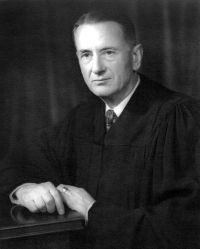
Portrait of Charles Evans Whittaker Charles Evans Whittaker Chapman v. United States (365 U.S. 610…

Any assumption that evidence sufficient to support a magistrate's disinterested determination to issue a search warrant will justify the officers in making a search without a warrant would reduce the Amendment to a nullity and leave the people's homes secure only in the discretion of police officers. * * * The right of officers to thrust themselves into a home is also a grave concern, not only to the individual but to a society which chooses to dwell in reasonable security and freedom from surveillance.
Source: Wikisource

Portrait of Charles Evans Whittaker Charles Evans Whittaker Chapman v. United States (365 U.S. 610…

When the right of privacy must reasonably yield to the right of search is, as a rule, to be decided by a judicial officer, not by a policeman or Government enforcement agent.
'There are exceptional circumstances in which, on balancing the need for effective law enforcement against the right of privacy, it may be contended that a magistrate's warrant for search may be dispensed with.
Source: Wikisource

Portrait of Charles Evans Whittaker Charles Evans Whittaker Chapman v. United States (365 U.S. 610…

Instead, it says: 'Our position is that when the landlord, paying a social call, found good reason to believe that the leased premises were being wasted and used for criminal purposes, he had authority to enter as a matter of right and to bring officers with him for this purpose.' It says that, under the common law, a landlord has an absolute right to enter the demised premises 'to view waste,' and that he should be able to exercise that right through law enforcement officers to whom he has delegated his authority.
Source: Wikisource

Get perspective with Kwize: daily news enlightened by great literature