Summary

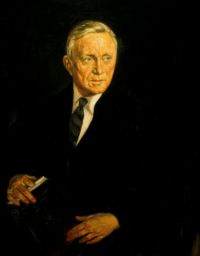
Portrait of William O. Douglas William O. Douglas United States v. Republic Steel Corp…

We can only conclude that Congress planned to ban any type of 'obstruction,' not merely those specifically made subject to approval by the Secretary of the Army. It seems, moreover, that the first clause being specifically aimed at 'navigable capacity' serves an end that may at times be broader than those served by the other clauses. Some structures mentioned in the second clause may only deter movements in commerce, falling short of adversely affecting navigable capacity.
Source: Wikisource

Portrait of William O. Douglas William O. Douglas United States v. Republic Steel Corp…

The particles creating the present obstruction were in suspension, not in solution. Articles in suspension, such as organic matter in sewage, may undergo chemical change. Others settle out. All matter in suspension is not saved by the exception clause in § 13. Refuse flowing from 'sewers' in a 'liquid state' means to us 'sewage.' Any doubts are resolved by a consistent administrative construction which refused to give immunity to industrial wastes resulting in the deposit of solids in the very river in question.
Source: Wikisource

Portrait of William O. Douglas William O. Douglas United States v. Republic Steel Corp…

In short, the first clause is aimed at protecting 'navigable capacity,' though it is adversely affected in ways other than those specified in the other clauses.
There is an argument that § 10 of the 1890 Act, 26 Stat. 454, which was the predecessor of the section with which we are now concerned, used the words 'any obstruction' in the narrow sense, embracing only the prior enumeration of obstructions in the preceding sections of the Act. The argument is a labored one which we do not stop to refute step by step.
Source: Wikisource

Get perspective with Kwize: daily news enlightened by great literature