Summary

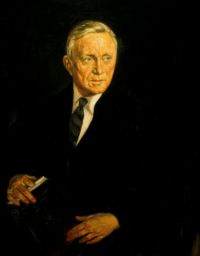
Portrait of William O. Douglas William O. Douglas United States v. Seaboard Air Line Railroad Company…

It may properly be said there is no 'train' in a true 'switching' operation. But when cars-at least in substantial number-are being received from consignors or delivered to consignees in an assembled unit of engine and cars that moves a substantial distance, the operation is intrinsically no different, for purposes of the Act, than a main-line haul.
Source: Wikisource

Portrait of William O. Douglas William O. Douglas United States v. Seaboard Air Line Railroad Company…

The District Court found that 'The movements complained of would not have been less hazardous to employees or the public if air brakes had been coupled and used.' Yet it is not for courts to determine in particular cases whether this safety measure is or is not needed. Congress determined the policy that governs us in applying the law. Traditionally, movements of assembled cars for substantial distances involved the hazards of crossing public highways and the tracks of other lines with attendant risks to the public.
Source: Wikisource

Portrait of William O. Douglas William O. Douglas United States v. Seaboard Air Line Railroad Company…

Nine spur tracks branch off these tracks to industrial sidings. About two miles from the 'classification' yard are plants of the Allied Chemical & Dye Company and Continental Can Company.
The complaint charged four violations: First, moving a locomotive and 26 cars as a single unit, without stops, from the track of Allied Chemical to the 'classification' yard. Second, moving a locomotive and 28 cars as a single unit, without stops, from the 'classification' yard to the track of Allied Chemical.
Source: Wikisource

Get perspective with Kwize: daily news enlightened by great literature