Summary

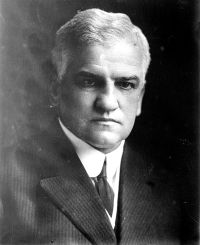
Portrait of John Hessin Clarke John Hessin Clarke Louisville Jeffersonville Bridge Company v…

This is not only a train movement, but it would be difficult to imagine one in which the control of the cars by train brakes would be more necessary, in order to secure that safety of employes, of passengers and of the public which it is the purpose of the act to secure, by requiring that engineers shall be given control sufficient to stop any train they may be moving, promptly on the first signal or sight of danger.
Source: Wikisource

Portrait of John Hessin Clarke John Hessin Clarke Louisville Jeffersonville Bridge Company v…

The mere inertia of 26 cars, which must usually be loaded, and especially when running 15 miles an hour, would render it impossible to control or to stop them promptly with power brakes operative only on the engine, and the ability to use such brakes on the entire train must often mean the difference between safety and serious accident when running, as here, in a crowded yard, across busy city streets and on main line tracks of railroads.
Source: Wikisource

Portrait of John Hessin Clarke John Hessin Clarke Louisville Jeffersonville Bridge Company v…

An engine and 26 cars assembled and coupled together, not only satisfies the dictionary definition of a 'train of cars,' but would certainly be so designated by men in general, and in any fair acceptation of the term must be regarded as constituting a train within the meaning of the statute. It was a train greater in length than most regularly scheduled trains were when this Safety Appliance Act was passed 26 years ago, and even yet, probably, exceeds in length, passenger and freight trains considered, more than a majority of the regular road trains in this country.
Source: Wikisource

Get perspective with Kwize: daily news enlightened by great literature