Summary

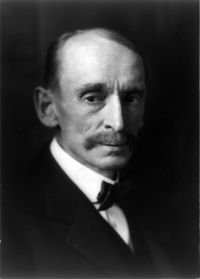
Portrait of William R. Day William R. Day Erie Railroad Company v. Purucker…

A request to charge must be calculated to give the jury an accurate understanding of the law having reference to the phase of the case to which it is applicable. Norfolk & W. R. Co. v. Earnest, 229 U.S. 115, 119, 57 L. ed. 1098, 1100, Ann. Cas. 1914C, 172, 33 Sup. Ct. Rep. 654. The first request simply asked a broad charge that if the plaintiff voluntarily, for his own convenience, went upon the tracks of the railroad, and the railroad was at the time being used and operated as a highway of interstate commerce, he assumed the risk and danger of so using the tracks.
Source: Wikisource

Portrait of William R. Day William R. Day Erie Railroad Company v. Purucker…

It failed to take into account the undisputed testimony that the engine ran into Marietta without signal or warning to him. Under such circumstnaces the injured man would not assume the risk attributable to the negligent operation of the train, if the jury found it to be such, unless the consequent danger was so obvious that an ordinarily prudent person in his situation would have observed and appreciated it.
Source: Wikisource

Portrait of William R. Day William R. Day Erie Railroad Company v. Purucker…

It appears that at and near the place of injury the company has a double track; that the north track is used for trains going west and the south track for trains going east; that the plaintiff, in going to the place designated, went upon the south track and was walking eastwardly, when a passenger train bound east came upon this track, and to get out of the way of it he stepped over upon the north or west-bound track
Source: Wikisource

Get perspective with Kwize: daily news enlightened by great literature