Summary

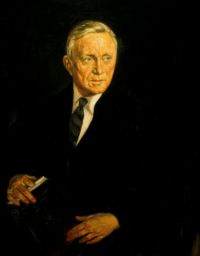
Portrait of William O. Douglas William O. Douglas Williams v. Fanning — Opinion of the Court

That was a suit brought by an Osage Indian to require payment to him of funds under an act of Congress. The power and responsibility of making the payments being in the Secretary of the Interior, he was held to be an indispensable party.
These cases evolved the principle that the superior officer is an indispensable party if the decree granting the relief sought will require him to take action, either by exercising directly a power lodged in him or by having a subordinate exercise it for him.
Source: Wikisource

Portrait of William O. Douglas William O. Douglas Williams v. Fanning — Opinion of the Court

It is he who refuses to pay money orders, who places the stamp 'fraudulent' on the mail, who returns the mail to the senders. If he desists in those acts, the matter is at an end. That is all the relie which petitioners seek. The decree in order to be effective need not require the Postmaster General to do a single thing-he need not be required to take new action either directly as in the Smith and Fall cases or indirectly through his subordinate as in the Rutter case. No concurrence on his part is necessary to make lawful the payment of the money orders and the release of the mail unstamped.
Source: Wikisource

Get perspective with Kwize: daily news enlightened by great literature