Summary

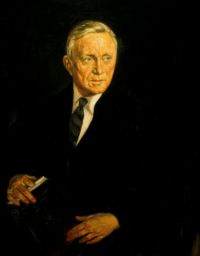
Portrait of William O. Douglas William O. Douglas Younger v. Harris — Dissenting Opinion (1971)

Every person who, under color of any statute, ordinance, regulation, custom, or usage, of any State or Territory, subjects, or causes to be subjected, any citizen of the United States or other person within the jurisdiction thereof to the deprivation of any rights, privileges, or immunities secured by the Constitution and laws, shall be liable to the party injured in an action at law, suit in equity, or other proper proceeding for redress.
Source: Wikisource

Portrait of William O. Douglas William O. Douglas Younger v. Harris — Dissenting Opinion (1971)

Equity jurisdiction will be exercised to enjoin the threatened enforcement of a state law which contravenes the Federal Constitution wherever it is essential in order effectually to protect property rights and the rights of persons against injuries otherwise irremediable; and, in such a case, a person, who as an officer of the State is clothed with the duty of enforcing its laws, and who threatens and is about to commence proceedings, either civil or criminal, to enforce such a law against parties affected may be enjoined from such action by a federal court of equity.
Source: Wikisource

Portrait of William O. Douglas William O. Douglas Younger v. Harris — Dissenting Opinion (1971)

The Civil War Amendments made civil rights a national concern. Those Amendments, especially § 5 of the Fourteenth Amendment, cemented the change in American federalism brought on by the war. Congress immediately commenced to use its new powers to pass legislation. Just as the first Judiciary Act, 1 Stat. 73, and the "anti-injunction" statute represented the early views of American federalism, the Reconstruction statutes, including the enlargement of federal jurisdiction, [5] represent a later view of American federalism.
Source: Wikisource

Get perspective with Kwize: daily news enlightened by great literature