Summary

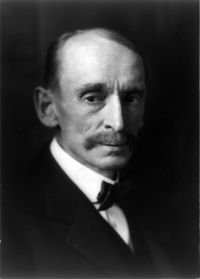
Portrait of William R. Day William R. Day American Express Company v. United States…

While, therefore, a proviso may sometimes be construed as extending rather than limiting legislation, each statute must depend upon its own terms, and a proviso will be given such construction as is consistent with the legislation under construction.
Turning to § 1 of the Hepburn act, it is apparent that all that immediately precedes the proviso appertains to the carriage of passengers, for common carriers are forbidden to issue or give any free ticket, free pass, or free transportation for passengers, except to its employees, etc. Until we come to the proviso, the act is clearly thus limited.
Source: Wikisource

Portrait of William R. Day William R. Day American Express Company v. United States…

Within the terms used in the Elkins act, such transportation enables one class of persons to obtain transportation at a different and less rate than that named in the published rates.
It is contended that such transportation is not within the terms of the act, as it was not the purpose of Congress to regulate in these provisions gratuitous transportation, but the purpose was to prevent discriminations, rebating, and so forth, where property has been carried by a common carrier for hire
Source: Wikisource

Get perspective with Kwize: daily news enlightened by great literature