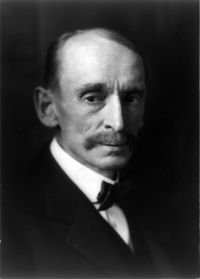
Summary

Portrait of William R. Day William R. Day Great Northern Railway Company v…

It is to be assumed that the right of way is such only as is needed for and devoted to railway purposes, and such as is rightfully exempt from taxes and assessments because of the payment of the gross earnings tax. Within its right of way defendant may at any time place additional tracks, or change the location of those it maintains, and, for that reason, it also seems proper that the safety of the passage for the traveler for the whole distance should be placed upon the railroad company.
Source: Wikisource

Portrait of William R. Day William R. Day Great Northern Railway Company v…

The Supreme Court of Minnesota in the instant case held that the railroad companies might be required construct a sidewalk upon the right of way on both sides of the planked crossing. In the opinion of the court the sidewalk, leading to the crossing, tend d to promote the safety and convenience of the public, and, after discussing the well-established authority of the state to require planking at crossings, as to the additional requirement to build the connecting sidewalk, said:
'There can be no controlling difference between the requirement of sidewalk and of planking.
Source: Wikisource

Portrait of William R. Day William R. Day Great Northern Railway Company v…

Planking is, to be sure, more to prevent persons in vehicles from injury, or the vehicles or teams from damage, by being stalled on the crossing. But, where a crossing is much traveled, safety, to say nothing of convenience, may require a separate space, like a sidewalk, reserved for pedestrians. There is a peculiar peril to travelers on foot, where many vehicles pass and the attention of the drivers is diverted to looking out for trains liable to use the crossing.
Source: Wikisource

Get perspective with Kwize: daily news enlightened by great literature