Summary

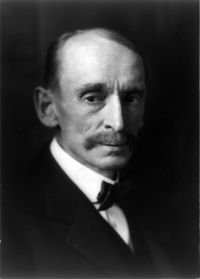
Portrait of William R. Day William R. Day Sand Filtration Corporation of America v…

May and Jekyll were to have the money advanced by them repaid if 'the party of the first part,' the Cowardin Company, 'shall realize a profit under said contract.' It is clear that the Cowardin Company did make a profit, and we are unable to see that it makes any difference that it was realized in the manner we have detailed, rather than from the construction of the work. The substance of the agreement between the Cowardin Company and May and Jekyll looked to the repayment of the money advanced in case the Cowardin Company realized a profit.
Source: Wikisource

Portrait of William R. Day William R. Day Sand Filtration Corporation of America v…

It is contended by the learned counsel for the appellant that the agreements of August 25, 1903, were cotemporaneous, and must be construed together as one agreement, and that the effect of such construction is to require the payment of $8,000 to May and Jekyll only in the event that the contract should prove profitable; and, as no profit was realized from the construction, nothing is to be paid. But while these contracts were dated the same day, whether they were executed at the same time or not does not appear, and certainly Dean was not in privity with May and Jekyll.
Source: Wikisource

Portrait of William R. Day William R. Day Sand Filtration Corporation of America v…

Upon the pleadings and testimony the lower courts have found, and we accept the finding, in the absence of a clear showing of incorrectness, that, without doing the work, the Cowardin Company has made out of the contract a sum in excess of $8,000, paid from the sums coming from the United States on account of the contract, in manner aforesaid.
The object of construction is to effectuate the intention of the parties in making a given contract.
Source: Wikisource

Get perspective with Kwize: daily news enlightened by great literature