Summary

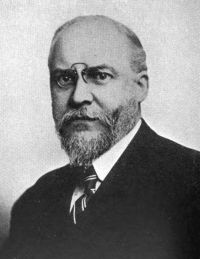
Portrait of William Raimond Baird William Raimond Baird Baird's Manual of American College Fraternities… (1879)

For many years the Alpha, or parent chapter, held the reins of authority; then the Graduate Charge took them up until the present system was inaugurated.
Annual conventions of the fraternity are held, generally under the auspices of some one chapter. At these conventions an oration is delivered, a poem is read, and generally some essay on the society’s history or progress is presented. The catalogue of members is issued at regular intervals, and the last one, published in New York in 1876, is ably edited and beautifully printed.
Source: Wikisource

Portrait of William Raimond Baird William Raimond Baird Baird's Manual of American College Fraternities… (1879)

A charter was granted to the College of South Carolina in 1859 under the name of Rho, but the charge was never organized. The Sigma died from lack of good material, while the Tau though flourishing for a time, shared the general fate of the Princeton Chapters. The Cornell Charge was first named Alpha Delta, but its name was changed to Beta in 1871. The last charge was formed from the Psi Chapter of Delta Tau Delta. The fraternity is now prosperous as a whole.
Source: Wikisource

Portrait of William Raimond Baird William Raimond Baird Baird's Manual of American College Fraternities… (1879)

The class in which Theta Delta Chi originated, that of 1849, graduated 140 men, and was the largest which had yet left the college. The fraternity originated from the mutual association and common literary tastes of its seven founders, and having once received an impetus it spread and grew as naturally as its rivals. Theodore B. Young, ’49, who entered into business in Schenectady; Wm. G. Aiken, a New York farmer’s son, who fell a victim to the cholera in Chicago; Wm. Hyslop, of Rhinebeck, N. Y., a New York physician who died while at the post of duty
Source: Wikisource

Get perspective with Kwize: daily news enlightened by great literature