Summary

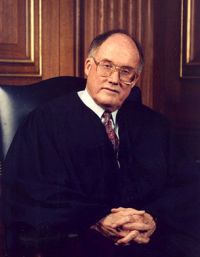
Portrait of William Rehnquist William Rehnquist Healy v. Beer Institute — Dissenting Opinion

Connecticut does not seek to erect any sort of tariff barrier to exclude out-of-state beer; its residents will drink out-of-state beer if they drink beer at all, and the State simply wishes its inhabitants to be treated as favorably as those of neighboring States by the brewers who sell interstate. There is no "tariff wall" between Connecticut and other States; there is only a maximum price regulation with which the interstate brewer would rather not have to bother.
Source: Wikisource

Portrait of William Rehnquist William Rehnquist Healy v. Beer Institute — Dissenting Opinion

The New York statute passed upon in Baldwin provided that no milk could be sold in the New York City metropolitan area unless it had been purchased from the producer for a price at least equal to the minimum specified by law. When this statute was applied to milk produced in Vermont but brought into the New York City metropolitan area for sale, the result was to require Vermont producers to give up the natural advantage which they would otherwise have obtained from the fact that the costs of production of milk in Vermont were lower than the costs of production in New York.
Source: Wikisource

Portrait of William Rehnquist William Rehnquist Healy v. Beer Institute — Dissenting Opinion

Neither the parties nor the Court points to any concrete evidence that the Connecticut regulation will have any effect on the beer prices charged in other States, much less a constitutionally impermissible one. It is merely assumed that consumers in the neighboring States possess "competitive advantages" over Connecticut consumers. Ante, at 339. But it is equally possible that Connecticut's affirmation laws, a response to a history of unusually high beer prices in that State, see United States Brewers Assn., Inc.
Source: Wikisource

Get perspective with Kwize: daily news enlightened by great literature