Summary

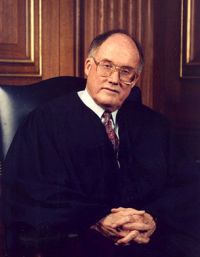
Portrait of William Rehnquist William Rehnquist Michigan v. Harvey — Opinion of the Court

Although a defendant may sometimes later regret his decision to speak with police, the Sixth Amendment does not disable a criminal defendant from exercising his free will. To hold that a defendant is inherently incapable of relinquishing his right to counsel once it is invoked would be "to imprison a man in his privileges and call it the Constitution."
Source: Wikisource

Portrait of William Rehnquist William Rehnquist Michigan v. Harvey — Opinion of the Court

There is no reason for a different result in a Jackson case, where the prophylactic rule is designed to ensure voluntary, knowing, and intelligent waivers of the Sixth Amendment right to counsel rather than the Fifth Amendment privilege against self-incrimination or "right to counsel." We have mandated the exclusion of reliable and probative evidence for all purposes only when it is derived from involuntary statements.
Source: Wikisource

Portrait of William Rehnquist William Rehnquist Michigan v. Harvey — Opinion of the Court

A defendant's right to rely on counsel as a "medium" between the defendant and the State attaches upon the initiation of formal charges, Moulton, 474 U.S., at 176, 106 S.Ct., at 487, and respondent's contention that a defendant cannot execute a valid waiver of the right to counsel without first speaking to an attorney is foreclosed by our decision in Patterson.
Source: Wikisource

Get perspective with Kwize: daily news enlightened by great literature