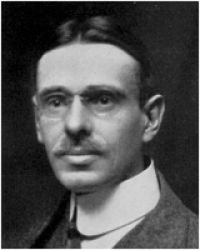
William Tyler Olcott

William Tyler Olcott

Summary

Portrait of William Tyler Olcott William Tyler Olcott Star Lore Of All Ages — Cancer… (1911)

Cancer is celebrated chiefly because it contains the great naked eye star cluster "Præsepe," the so-called "Manger," from which two asses, represented by stars near by, are supposed to feed. This cluster is known in English astronomical folk-lore as "the Beehive," a name we do not know the origin of. This marvellous aggregation of suns presents on a clear night a dim misty appearance. It has often been mistaken for a comet.
Source: Wikisource

Portrait of William Tyler Olcott William Tyler Olcott Star Lore Of All Ages — Cancer… (1911)

Burritt thinks that as the Hindus in all probability derived their knowledge of the stars from the Chaldeans, the figure of the crab in this place is more ancient than the beetle.
The crab, tortoise, and beetle, the creatures selected to represent Cancer, are similar in many respects. They are hard shelled, insignificant in appearance, and sluggish in their movements, and in this latter attribute would well typify the sun's apparent movement when it arrives in this constellation.
Source: Wikisource

Portrait of William Tyler Olcott William Tyler Olcott Star Lore Of All Ages — Cancer… (1911)

The "Beehive" is especially interesting historically as it afforded Galileo one of the earliest telescopic proofs of the existence of multitudes of stars invisible to the naked eye. He wrote: "The nebula called Præsepe, which is not one star, only, but a mass of more than forty small stars. I have noticed thirty stars besides the Aselli." The great telescopes of the present day reveal in this cluster three hundred and sixty-three stars.
Source: Wikisource

Get perspective with Kwize: daily news enlightened by great literature