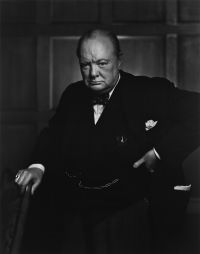
Winston Leonard Spencer Churchill

Winston Leonard Spencer Churchill

Summary

Portrait of Winston Leonard Spencer Churchill Winston Leonard Spencer Churchill London to Ladysmith via Pretoria… (1900)

Sir Redvers Buller, who has always disdained effect, was for the second course—unpalatable as it must have been to a fearless man; miserable as it is to call off infantry after they have made sacrifices and won positions, and to call them off a second time. The discussion was an informal one, and no votes were taken, but the General yielded to the advice of his subordinate, rightly, I hold, because now at least we know the strength of the enemy's position, whereas before we only dreaded it; and knowledge is a better reason for action than apprehension.
Source: Wikisource

Portrait of Winston Leonard Spencer Churchill Winston Leonard Spencer Churchill London to Ladysmith via Pretoria… (1900)

The Dorset Regiment—the last of Talbot Coke's Brigade—was ordered to support the struggling troops. The gallant Lyttelton of his own accord sent the Scottish Rifles and the 3rd King's Royal Rifles from Potgieter's to aid them. But though their splendid attack did not help the main action; though the British artillery, unable to find or reach the enemy's guns, could only tear up the ground in impotent fury; though the shell fire and rifle fire never ceased for an instant—the magnificent infantry maintained the defence, and night closed in with the British still in possession of the hill.
Source: Wikisource

Portrait of Winston Leonard Spencer Churchill Winston Leonard Spencer Churchill London to Ladysmith via Pretoria… (1900)

The fight had been so close that no proper reports had been sent to the General, so he listened with great patience and attention. One thing was quite clear—unless good and efficient cover could be made during the night, and unless guns could be dragged to the summit of the hill to match the Boer artillery, the infantry could not, perhaps would not, endure another day. The human machine will not stand certain strains for long.
The questions were, could guns be brought up the hill; and, if so, could the troops maintain themselves? The artillery officers had examined the track.
Source: Wikisource

Get perspective with Kwize: daily news enlightened by great literature