Summary

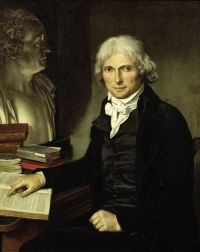
Portrait of Xav. Bichat Xav. Bichat Physiological Researches upon Life and Death (1809)

The definition of life is to be sought for in abstract considerations; it will be found, I believe, in this general perception: life is the totality of those functions which resist death.
Such is in fact the mode of existence of living bodies, that every thing which surrounds them tends to their destruction. Inorganic bodies act upon them incessantly; they themselves exercise a continual action, the one upon the other
Source: Wikisource

Portrait of Xav. Bichat Xav. Bichat Physiological Researches upon Life and Death (1809)

The assemblage of the functions of the first class, I call organic life, because all organized beings, vegetable or animal, enjoy it in a greater or less degree, and because organic texture is the only condition necessary to its exercise. The united functions of the second class form animal life, thus called, because it is the exclusive attribute of the animal kingdom.
Source: Wikisource

Portrait of Xav. Bichat Xav. Bichat Physiological Researches upon Life and Death (1809)

The animal is almost passive in the first order of functions; he becomes active in the second, which results,—from the successive actions of the brain—whence springs volition, the consequence of sensations, from the nerves which transmit this volition, and from the organs of locomotion and voice—the agents of its execution. External bodies act upon the animal by the first order of functions
Source: Wikisource

Get perspective with Kwize: daily news enlightened by great literature