Ambo

Definition and stakes

Caryl Coleman,  Catholic Encyclopedia (1913)

“ An ambo is an elevated desk or pulpit from which in the early churches and basilicas the Gospel and Epistle were chanted or read, and all kinds of communications were made to the congregation; and sometimes the bishop preached from it, as in the case of St. John Chrysostom, who, Socrates says, was accustomed to mount the ambo to address the people, in order to be more distinctly heard (Eccl. Hist., VI, v) . Originally there was only one ambo in a church, placed in the nave, and provided with two flights of steps ”

Source: Wikisource

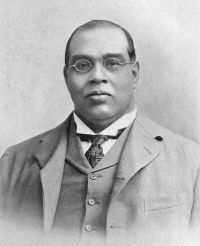
Portrait of Andrew Jackson Shipman Andrew Jackson Shipman,  Catholic Encyclopedia (1913)

“ In cathedral churches in Russia there is also another ambo situated in the middle of the nave, upon which the bishop stands during certain parts of the pontifical service. In the Greek (Hellenic) Orthodox Church the ambo is more often in the ancient style, but has been removed from the middle to the sides of the church. The Greek Liturgy, however, plainly shows that the ambo was originally raised and that it was in the middle of the church. ”
Source: Wikisource

New York State Historical Association. Meeting,  Proceedings of the New York Historical Association…

“ A writer in 1684 notes: "Where the town of Perth is now building is on a shelf of land rising twenty, thirty and forty feet." Smith (Hist. of New Jersey) wrote: "Ambo, in Indian, 'A point;'" but there is no such word as Ambo, meaning "A point," in any Indian dialect. Heckewelder's interpretation: "Ompoge, from which Amboy is derived, and also Emboli, means 'A bottle,' or a place resembling a bottle," is equally erroneous, although Emboli may easily have been an Indian pronunciation of Amboy. ”
Source: Gutenberg

Get perspective with Kwize: daily news enlightened by great literature