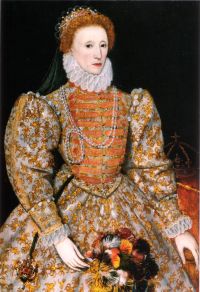
Queen Isabella I of Castile

Definition and stakes

Various Graham's Magazine, Vol. XXXIV, No…

I am like a strong eagle, longing to scale the pinnacle of a lofty mountain, but bound by a heavy chain in a dark and miry valley, I am wearing out my life in a vain effort to spread my shackled pinions to the glorious sunlight. Let your royal bounty remove these shackles, give me the means, and say to me go, explore the ocean, discover new worlds, and take possession in the name of Isabella, the illustrious queen of Castile.
Source: Gutenberg

Great Men and Famous Women. Vol…

But the same people who had said "Isabella shall be the heir-apparent," said now "Isabella shall rule over us," and conquered. The reign of Isabella, therefore, dates from 1479, when she was left in undisputed possession of her throne, rather than from 1474, when she wore her crown for the first time in Segovia. The same year that brought peace to the Queen of Castile elevated Ferdinand to the throne of Aragon.
No more important epoch marks the history of Spain than the union of the crowns of Castile and Aragon; it meant the end of petty principalities and powers, it meant united Spain.
Source: Gutenberg

1911 Encyclopædia Britannica, Volume 14… (1911)

Finally however, in face of very great difficulties, she was married to Ferdinand of Aragon at Valladolid on the 19th of October 1469. Thence forward the fortunes of Ferdinand and Isabella were inseparably blended. For some time they held a humble court at Dueñas, and afterwards they resided at Segovia, where, on the death of Henry, she was proclaimed queen of Castile and Leon (December 13, 1474) . Spain undoubtedly owed to Isabella’s clear intellect, resolute energy and unselfish patriotism much of that greatness which for the first time it acquired under “the Catholic sovereigns.”
Source: Wikisource

Get perspective with Kwize: daily news enlightened by great literature