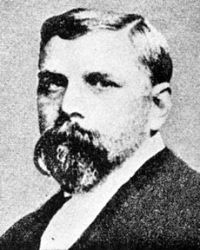
Wilkie Collins

Definition and stakes

Portrait of Anthony Trollope Anthony Trollope,  An Autobiography of Anthony Trollope

“ Of Wilkie Collins it is impossible for a true critic not to speak with admiration, because he has excelled all his contemporaries in a certain most difficult branch of his art; but as it is a branch which I have not myself at all cultivated, it is not unnatural that his work should be very much lost upon me individually. When I sit down to write a novel I do not at all know, and I do not very much care, how it is to end. Wilkie Collins seems so to construct his that he not only, before writing, plans everything on, down to the minutest detail, from the beginning to the end ”
Source: Gutenberg

Library of the World's Best Literature…

“ Wilkie Collins, born January 8th, 1824, did not show any special precocity in boyhood and youth. He probably learned much more from his self-guided reading than from his schooling at Highbury, especially after his acquisition of French and Italian during two years in Italy in his early teens. The influences about him were strongly artistic. His father, William Collins, was distinguished as a landscape painter. The well-known portrait painter Mrs. Carpenter was his aunt, and the distinguished Scotch artist David Wilkie his godfather. But human action and emotion interested him more than art. ”
Source: Gutenberg

Michael Sadleir,  Excursions in Victorian Bibliography

“ In the sixties, no less than in the nineteen-twenties, to belong to the writing set was two-thirds of reputation. There is no log-rolling so expert, no admiration so mutual as that existing among members of the various groups that practise the arts. Whence it has come about that the name of Wilkie Collins—who as an artist may not be mentioned in the same chapter as Trollope or Marryat, or even Mrs. Gaskell—is a household word, while those of his greater fellows sound strangely, as the notes of some old-fashioned melody. ”
Source: Gutenberg

Get perspective with Kwize: daily news enlightened by great literature