Battlefleet

Definition and stakes

William Wood,  Flag and Fleet: How the British Navy Won the Freedom of the Seas

“ The chief kinds of fighting craft in the Grand Fleet can be told off on the fingers of one hand. First, the Battleships and Battle Cruisers. These are to our own fleets what ships-of-the-line-of-battle were to Nelson's, that is, they are the biggest and strongest, with the biggest and strongest guns and the thickest armour. The battle cruiser is faster than the battleship, and therefore not so strong; because to be faster you must thin your heavy armour to let you put in bigger engines. All the ships of this first kind were either Dreadnoughts or super-Dreadnoughts ”
Source: Gutenberg

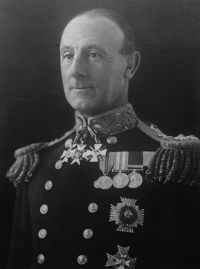
Portrait of John Rushworth Jellicoe John Rushworth Jellicoe,  The Crisis of the Naval War

“ A modern fleet consists of many units of different types—battleships, battle-cruisers, light cruisers, destroyers and submarines. Before I relinquished the command of the Grand Fleet, large sea-going submarines of high speed, vessels of the "K" class, had been built to accompany the surface vessels to sea. It is very essential that senior officers should have every opportunity of studying tactical schemes in which various classes of ships and kinds of weapons are employed. In considering the future of the Navy it is impossible to ignore aircraft. ”
Source: Gutenberg

W. MacNeile Dixon,  The Fleets Behind the Fleet

“ View it thus, and the Royal Navy becomes no more than a symbol, the expression of a peculiar national life. Science may think of it as the tough exterior hide, the armour, like that of the dinosaurus, with which nature in the process of evolution provides her mightiest creatures. It is in fact simply the glittering shaft on the string of a powerful bow, the power is in the bow and not the arrow. Any one can see that the mere possession of a fleet cannot bestow naval power. ”
Source: Gutenberg

Get perspective with Kwize: daily news enlightened by great literature