AI-generated from sources
Human Sacrifice as a Title to Empire, From Cuzco to Castile
In Brief
- The Incas’ founding legend presented their rule as a cure for savagery: before the Sun sent his children, it said, men ate one another and offered human victims to gross gods.
- Pedro Sarmiento de Gamboa, who wrote a history of the Incas for the Spanish viceroy of Peru, turned that logic against them: rulers guilty of sins against nature could lawfully be removed, even if they were natural lords.
- The evidence on Inca sacrifice is a contest between interested witnesses: Spanish chroniclers affirmed it, an Inca-Spanish historian denied it outright, and a more moderate witness admitted occasional sacrifices while accusing Spaniards of inflating crimes to justify ill-treatment.
- The charge was portable: 19th-century critics turned it back on Spain, arguing that Christian nations had their own religious killings to answer for.
Main authors
Before the Incas, so the story went, men lived in the most absolute savagery. They ate one another and offered human victims to gods as gross as themselves. Then the Sun took pity on them and sent two of his children, Manco Capac and Mama Ogllo, up from the depths of Lake Titicaca to establish his worship [1]. Albert Réville, the historian of religion who retold the legend in 1884, read it for what it did rather than for what it said: a local tale of the lake and of Cuzco, recast to serve a dynasty [1]. Its lesson is simple. Whoever ends the bloody rites deserves to rule the people who practised them.
The same reasoning later served the Spaniards against the Incas. In the plea that the 19th-century historian John William Draper set out to refute, a Peru that sacrificed human hecatombs at the funerals of great men had to be savage, and the atrocities of its conquerors stood excused [2]. Chroniclers such as Molina, Cieza de León and Acosta reported human sacrifice in the Inca ritual; Garcilaso de la Vega, the Inca-Spanish historian, “indignantly denied” it [3, 4]. The dispute looks like a question of fact. It is also a question of title. Each power that ruled the Andes justified itself by the blood its predecessor had shed at the altar, and Garcilaso, in clearing his ancestors, reached for the very argument that had once made them masters of their neighbours.
Manco Capac and the savages before the Sun
The founding legend of the Incas was a political instrument before it was a creed. Réville saw in it a local myth “transformed into an imperial myth” [1]. He judged the dynastic policy of the Incas the most methodical ever pursued: priest-kings ruling as children of the Sun, they had fused the interests of their family with those of religion, politics and civilization until no one could tell them apart [5]. To obey the Inca was to obey the supreme god [5]. A myth of that kind needs a darkness to dispel. The cannibals and the victims of the legend are not decoration; they are the reason the Sun’s children had to come.
In that scheme the past and the frontier become the same place. Andrew Lang noticed that Garcilaso had found a totemic creed among the remote and ruder neighbours of the Incas, and had then attributed it to the pre-Inca populations [6]. The peoples still outside the empire stood in for the ancestors it had already redeemed. Cuzco judged the gods of its neighbours with the same assurance. Jennie Young, writing on Peruvian ceramics, argues that in condemning the Chimus for worshipping animals, the Inca mistook their symbols for idolatry, and that nothing shows the Inca creed to have been superior to theirs [7]. Long before any Spaniard arrived, condemning another people’s cult belonged to the Andean language of power.
Conquest, in this light, took the form of conversion. Millicent Todd Bingham, in 1914, describes the Inca’s messengers promising every good gift to a reluctant people, on condition that it renounce its independence, its language and its religion, and send its chief god as a hostage to the Temple of the Sun in Cuzco [8]. The image is exact: the conquered deity is not destroyed, it is taken captive. Lewis Spence finds the same move at the level of doctrine. What he calls the official legend made Viracocha, Pachacamac and Manco Capac three sons of the Sun, blending three religions while reserving the dominion of mankind to Manco Capac’s line [9]. Francisco García Calderón, by contrast, credits the Incas with respecting the rites and customs of the vanquished [10]. The disagreement is less sharp than it seems. A religion absorbed and subordinated is respected in one sense and abolished in another.
The Inca claim found an unexpected echo in the British Empire. Thomas Inman, a British writer of the imperial age, takes it at face value. When the Incas annexed tribes that sacrificed and ate men, he writes, they always abrogated the custom, and with far more firmness than Britain had shown against the burning of widows and the self-immolation of pilgrims in India [11]. He raises the obvious objection only to set it aside. “Some may doubt whether a conqueror ought to interfere” with the religious customs of the vanquished, he concedes, but few would plead for human sacrifice and cannibalism [11]. The passage shows how portable the argument is. Abolishing an abomination licenses the conqueror's interference with the customs of the vanquished, in the Andes as in India.
Sarmiento’s history for the Viceroy, the Incas as tyrants
In Spanish hands the argument was turned against its authors. Pedro Sarmiento de Gamboa wrote his History of the Incas for the Viceroy Francisco de Toledo, who governed Peru from 1569 to 1581 and sent the work to Philip II with painted cloths showing the Inca genealogy [12]. The book argued a case. It held that no one of Inca lineage could claim a right of succession, nor pass for a natural or legitimate lord [13]. Its doctrine of war went further still. Even true and natural lords could lawfully be removed and replaced by a new government, because man may rightly be punished for “sins against nature”, though the native community neither opposed those practices nor wished to be avenged [14].
The shape of that reasoning is the Inca myth’s own: a civilizer arrives, finds abominations, and earns dominion by ending them. Only the civilizer has changed. To make the claim hold, Sarmiento had to retell the founding story, and in his version the children of the Sun become fearsome adventurers. They claimed to be sons of Viracocha the Creator, he writes, and being fierce they made the people fear them and hold them to be more than men [15]. Mama Huaco, whom he calls fierce and cruel, proposes to seek fertile lands, subjugate their people and make war on all who refuse them as lords [16]. The chiefs of the valley of Cuzco end up resolving to die for their liberty, and its inhabitants unite to make war on the Incas [17]. The civilizing hero has become a usurper, and the savage before him a people defending its land.
The word tyrant did not stay where Sarmiento put it. The editorial apparatus that accompanies his history in English calls Toledo himself an “inexorable tyrant”. Having the innocent young prince Tupac Amaru in his power, the Viceroy resolved to put him to death, and the native population was overwhelmed with grief [18]. Within a single volume the charge of tyranny passes from the Incas to the official who commissioned their indictment. That reversal is the pattern of the whole quarrel. The vocabulary of cruelty fits either hand.
Three centuries after Toledo, the Spanish argument still had its defenders. In 1868 the Catholic World addressed readers who felt only tender sympathy for the Incas and Montezumas and nothing but execration for the invaders. It reminded them that the religions of Mexico and Peru were stained with human sacrifices [19]. It then placed Pizarro’s sword in the hand of the same Being who sends avalanche and pestilence, beside those of Joshua, Cyrus and Attila, as a retribution adjusted to the crime [19]. Sacrifice is no longer an ethnographic fact here. It is the hinge of a theodicy, and the conquest is its sentence.
Garcilaso’s denial and the war of witnesses
On the facts, the record is a dispute between witnesses, each with a stake in the outcome. A history of the Americas lists Molina, Cieza de León, Montesinos, Balboa, Ondegardo and Acosta as affirming human sacrifice in the Inca ritual, against Garcilaso’s denial [3]. Cieza himself stands in the middle. He admits occasional sacrifices but holds that the Spaniards grossly exaggerated their number and frequency [3]. His reason is pointed: according to the notes of Sarmiento’s history, Cieza observed that the Spaniards falsely imputed crimes to the Indians to justify their ill-treatment [20]. The same notes nonetheless conclude that the weight of evidence favours the sacrifice of two infants at the festival of the Huarachicu [20]. Two infants are not a hecatomb. Nor are they nothing.
Garcilaso’s denial reads best as loyalty to the founding myth. If the Incas came to replace bloody rites with the worship of the Sun, they could not have practised those rites; the savagery had to belong to others. That is where he placed the cruder creeds he encountered, among the neighbours of the empire and, beyond them, the peoples before it [6]. Long afterwards, in 1912, W. E. Hardenburg still relayed his conclusion: under the Incas, as Garcilaso and other early writers recorded, human blood was never shed purposely [4]. Hardenburg needed that orderly past as a foil for the torture and murder of whole tribes he was denouncing in the Putumayo [4]. The denial now served a new cause, as the myth had served an old one.
The witnesses had motives, and some readers named them. Sir Daniel Wilson lists three forces that overdrew the picture of the beneficent despotism of the Incas: the conquerors’ wonder at gems and gold, the credulity of missionary priests anxious to magnify the splendid paganism they had overthrown, and the patriotic exaggeration of later chroniclers of native descent [21]. All three pushed the same way: they overdrew the beneficence of the empire. The notes to Sarmiento’s history credit Garcilaso with a “fascinating love for his people”, while looking to Ondegardo and Santillana for more reliable accounts of Inca laws [22]. The compliment doubles as a caution.
Later writers took sides with the same confidence. Cyrus Townsend Brady considers it conclusively demonstrated that the Peruvians worshipped their Supreme Being without human sacrifice [23]. Allan Menzies, reading the Spanish writers, finds Inca practice falling well short of its doctrine, with many boys and girls offered in sacrifice on great public occasions [24]. W. H. Koebel holds both views at once. Inca rule over the conquered was beneficent, he writes, save in one respect: a Sun “greedy of human blood”, whom his priests never stinted [25]. The concession is telling. Even a sympathetic observer could not grant the empire its claim to have closed the age of the altars.
Smoking altars and Christian dungeons, the charge turned on Castile
Sacrifice also served as a yardstick for ranking peoples. García Calderón sets the Inca monarchy, which recalls the great empires of Asia, against a Mexican despotism ruder and more barbarous, where the blood of human victims dripped from smoking altars [26]. Mexico’s blood is one mark of its lower rank, beside a feudal structure and a social organism less perfect than that of the Inca monarchy. On that point the ladder of civilizations echoes the Inca myth: the less blood at the altar, the stronger the claim to order.
The yardstick could just as easily be laid against the accusers. Draper rejects the Spanish plea outright. Every civilized nation, he writes, has popular practices that lag behind its intelligence, and in this respect Spain herself was guilty [2]. He even sets the American rite above the violence of conquest, calling it part of a religious solemnity “unstained by passion” [2]. Elias Johnson, writing on the Iroquois, makes a parallel reversal. Indians were said to be cruel to captives, he grants, but from what is known of them it is not to be inferred that any Indian chief ever filled dungeons with innocent victims or slaughtered thousands of his own people for quiet dissent from a religious dogma [27]. The charge of killing in the name of religion returns to the Christian nations that had made it a title.
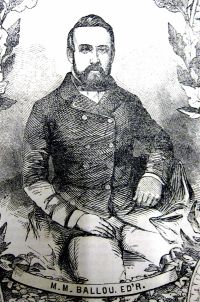
Religious zeal, the alibi of conquest, could become its indictment. Maturin M. Ballou answers the apologists who excused Pizarro’s cruelties by his holy purpose of extending the dominion of the cross. He recalls the fate of the wife of the Inca Manco, a prisoner in Pizarro’s power, stripped, bound to a tree, scourged before the camp and shot to death with arrows [28]. A religion that required such acts for its extension, he concludes, was unworthy of adoption [28]. This is the Inca argument once more, now aimed at Castile: a faith judged by its victims.
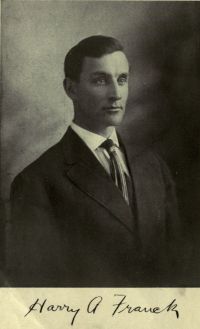
Neither title bound everyone it claimed to cover. Harry Franck, travelling in the Andes, argues that by convincing their subjects of their own divine origin the Incas bred a passive fatalism that made the Spanish conquest easy. His judgment is coloured by his doubt that the Indians ever possessed initiative at all [29]. William Hickling Prescott’s account of Manco’s departure from Cuzco suggests another reading. The Inca’s movements were watched less by the Spaniards than by Indian allies in the capital, Cañaris from the north, too recently reduced by the Incas to feel much sympathy for them or their institutions [30]. For such peoples, the children of the Sun had not ended an age of savagery. They were simply the previous conquerors.
Whether the Incas sacrificed human beings has never been only a question of fact. The dynasty told its subjects that before the Sun’s children came, men ate one another and slaughtered victims for gross gods. The Spaniards answered that the Incas were themselves tyrants, guilty of sins against nature, whom any just power might remove. Garcilaso de la Vega, the Inca-Spanish historian, denied all sacrifice, and attributed the cruder creeds he found among the ruder neighbours of the Incas to the peoples before them, as the dynasty’s own legend had done. The evidence that survives sits between these claims: occasional offerings, many boys and girls reported offered on great public occasions, perhaps two infants at a single festival—far from the hecatombs alleged, and far from a bloodless golden age.
What endures across three centuries is the use made of the accusation. Whoever proves the predecessor bloody inherits the land; whoever stands accused points to older and ruder peoples, or to the accuser’s own dungeons and executions. Inca myth, Spanish law and Catholic theodicy share one grammar, and the critics who turned the charge on Castile spoke it as fluently. Every empire in the Andes claimed to have abolished human sacrifice. None of them gave up using it.