AI-generated from sources
Prostate cancer disparity: The color line as a determinant of health and death
In Brief
- Current public health models emphasizing individual awareness and early detection fail to address the systemic inequalities that disproportionately affect African-American men regarding prostate cancer.
- The high risk among Black men is identified as a social marker of historical disadvantage—the 'color line'—rather than a purely biological determinant.
- Systemic prejudice, rooted in slavery and perpetuated institutionally, creates barriers to care, fosters deep mistrust in healthcare systems, and constrains the ability to make healthy lifestyle choices.
- Achieving health equity requires a paradigm shift from focusing on race as a risk factor to actively dismantling racism as a root cause, coupled with broader social and economic empowerment.
Main authors


A cornerstone of modern public health strategy is the emphasis on early detection as the most effective tool in combating chronic diseases like prostate cancer [1, 2]. For decades, official discourse has underscored a commitment to defeating the disease by raising awareness, promoting preventative screenings, and advancing medical research [3, 4]. The logic is straightforward and compelling: identifying cancers at their earliest, less dangerous stages significantly improves the chances of successful treatment and can be the difference between life and death . This approach relies on a universal call to action, urging men, particularly those over 50, to engage with healthcare providers, understand their risk, and adopt healthier lifestyles [5].
However, this universal message is complicated by a persistent and troubling caveat: the disproportionate impact of prostate cancer on African-American men [6, 7]. This demographic is consistently identified as a group facing the greatest risk, a fact acknowledged in public health campaigns but often left without deep explanation . The very mention of race as a primary risk factor, alongside age and family history, raises profound questions. It pushes the conversation beyond the comfortable territory of individual health choices and into the complex and historically fraught landscape of race in America . The disparity suggests that the promise of early detection is not being realized equally, and that a barrier more formidable than a lack of information may be at play.
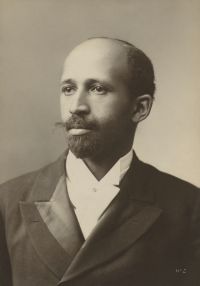
This unequal burden of disease compels a deeper analysis, one that moves beyond demographic statistics to interrogate the systemic failures they represent. The challenge is to understand why a specific racial group experiences such a different outcome within the same healthcare system. The answer may lie not in biology alone, but in the historical and ongoing reality of what Frederick Douglass and W.E.B. Du Bois termed the 'color line'—a pervasive system of prejudice that shapes every facet of American life, from the workshop to the jury box, and, critically, to the doctor's office [8, 9, 10]. This deep-seated 'color prejudice' creates structural barriers to access, fosters mistrust, and perpetuates the very conditions of inequality that manifest as disease, thereby undermining the promise of equitable care [11].
The Public Health Consensus on Awareness and Prevention
The public health approach to prostate cancer, as articulated over successive administrations, has been built on a foundation of awareness, research, and individual responsibility [12]. The core message is one of empowerment through knowledge, urging men to learn the risk factors, understand the symptoms, and speak with their doctors about screening options . This strategy is supported by significant federal investment in research, aimed at everything from prevention and detection to treatment [13]. The pursuit of scientific breakthroughs, such as identifying predisposing genes, is presented as a central pillar in the fight, offering hope for a future free from the disease [14].
A key component of this consensus involves promoting behavioral change as a means of risk reduction . Official guidance consistently links healthy eating habits, regular exercise, and avoiding obesity with a decreased likelihood of developing cancer [15]. This places a significant onus on the individual to manage their health through responsible lifestyle choices, framing prevention as an accessible goal for all citizens [16]. Regular check-ups and preventative screenings are presented as the logical extension of this personal responsibility, allowing doctors to intervene before a disease can spread .
Despite this confident public messaging, there remains an undercurrent of scientific uncertainty. It is openly acknowledged that the precise role of environmental and dietary factors is not fully understood, nor is the reason for the disease's varying progression among different individuals . Most critically, the specific reasons for the disproportionate effect on African-American men remain an unanswered question, a persistent gap in medical knowledge that is frequently cited as a priority for future research . This gap highlights a limitation in the current paradigm; while the system promotes universal solutions like diet and exercise, it simultaneously identifies a specific racial group for whom the risk is inexplicably higher, suggesting that individual choices alone cannot account for the disparity.
From Risk Factor to Social Marker: The Enduring 'Color Line'
Identifying African-American men as a high-risk group is a standard element of prostate cancer awareness campaigns . On the surface, this appears to be a helpful piece of medical information. However, viewed through a historical lens, the simple act of naming color as a risk factor takes on a more complex meaning. The 'color line,' as a concept, describes a societal barrier built on prejudice that isolates and disadvantages Black people in every sphere of life [17]. This line is not an abstract idea but a tangible force that dictates access to education, employment, justice, and, by extension, health . When public health messaging singles out a racial group, it intersects with this deeply entrenched social reality.
Frederick Douglass argued that color itself is neutral; it is the negative conditions with which it has been coupled—slavery, poverty, ignorance, and dependence—that make it an object of prejudice [18]. In this framework, 'color' as a risk factor is not a biological determinant but a social one. It serves as an advertisement, a visible marker for a population that has been subjected to centuries of systemic disadvantage [19]. The physical, intellectual, and moral injuries inflicted by slavery and its aftermath created the very conditions of degradation that were then used to justify further oppression [20]. This 'moral disorder' of prejudice creates its own justification, painting a hateful picture and then forcing its subjects to conform to it [21].
Therefore, the elevated risk of disease among African-Americans cannot be disentangled from this history. The transition from slavery to freedom was fraught with economic peril, ruthless competition, and crystallized racial prejudice that became embedded in law and custom [22, 23]. This 'unreasoning prejudice' confronts Black people in every aspect of life, creating a state of constant social and economic vulnerability . The health disparities seen today are a direct legacy of this history, where the 'color line' manifests as limited access to quality education, economic instability, and residence in environments that may themselves pose health risks—all factors that lie beyond the scope of individual lifestyle choices .
The Systemic Manifestations of Historical Prejudice
The prejudice that defines the color line is described as a tenacious and irrational force, a 'moral magic' that can twist innocence into crime and justify violence [24]. It is not merely an individual feeling but a societal sickness that permeates institutions and shapes public sentiment [25, 26]. This systemic prejudice, rooted in the legacy of slavery, has historically denied Black people legal protection, economic opportunity, and basic human dignity, creating a mountain of crushing weight on the race [27]. Such a history inevitably engenders a deep-seated mistrust in the very institutions that now offer medical advice.
The call for individuals to simply 'talk to their doctors' overlooks the profound barriers that this history creates . For a community historically subjected to exploitation and neglect, the healthcare system may not be viewed as a neutral or benevolent entity. The prejudice that denies a person a job, a quality education, or justice in court is the same prejudice that can manifest, consciously or unconsciously, in a clinical setting . This context is crucial for understanding why some men may be discouraged from seeking care . The issue is not merely a lack of information but potentially a lack of trust in the system to provide equitable and respectful treatment.
Furthermore, the public health focus on individual behavior fails to account for the systemic constraints on those behaviors . W.E.B. Du Bois argued that the social and economic regeneration of the Negro required more than just manual training; it demanded higher education and the development of skilled thinkers to navigate the 'whirl of work' and racial contact [28, 29]. The ability to make 'healthy choices' is predicated on a foundation of stability, resources, and knowledge that has been systematically denied to many by the color line . An appeal to modify one's diet or exercise habits is insufficient when confronting the larger realities of economic struggle and social disenfranchisement that are the direct result of historical prejudice [30].
Beyond Awareness: Toward Health Equity
Achieving true health equity requires a paradigm shift from focusing on race as a risk factor to confronting racism as a root cause. While continued medical research is vital, the most pressing questions are not solely biological . They are sociological. The unexplained disparity in prostate cancer outcomes is a symptom of a much larger social ailment: the enduring power of a prejudice that shapes opportunity and well-being . Simply investing more in research without addressing the social conditions that produce unequal outcomes will not close the gap.
The path forward involves recognizing that progress is a 'pull,' not a 'push,' often led by the elevation and empowerment of the most disadvantaged [31]. For Du Bois, the key was the development of the 'Talented Tenth'—college-educated individuals who could provide leadership, heal disease, and secure legal protection for the masses [32, 33]. This perspective suggests that health interventions cannot be divorced from broader struggles for social, economic, and educational equality. A population's health is inextricably linked to its ability to command resources, think critically, and advocate for its own rights within a just society .
Ultimately, the goal must be to dismantle the arbitrary barriers that prevent individuals from achieving their full potential . If prejudice can be overcome in some individuals and does not exist in other nations, it proves the sentiment is not a vital or inevitable part of human nature [34, 35]. Eradicating the color line in health requires more than awareness campaigns; it demands a saner selfishness that finds the rights of all in the 'whirl of work' . It requires building a healthcare system and a society where, as Douglass hoped, character, not color, is the passport to consideration, and where the promise of a long and healthy life is extended to all, regardless of race .
The disproportionate burden of prostate cancer on African-American men is a stark indictment of the limits of a public health model that emphasizes individual responsibility while overlooking systemic inequality. The repeated identification of race as a key risk factor, without a corresponding interrogation of the racism that gives it meaning, serves to obscure the true nature of the problem . The disparity is not a mere statistical anomaly but a predictable outcome of a society structured by a persistent 'color line'—a historical and ongoing system of prejudice that has inflicted deep and lasting wounds on the health and well-being of Black Americans .
Moving forward, the challenge is to look beyond the convenient marker of skin color and address the harsh conditions with which it has been coupled: poverty, disenfranchisement, and institutional neglect . While the pursuit of new medical treatments and genetic markers is essential, it must be paired with an aggressive effort to dismantle the social and economic barriers that preclude access to care and foster deep-seated mistrust . The ultimate cure for racially disparate health outcomes lies not only in the laboratory but in the difficult, necessary work of creating a truly equitable society where the color line ceases to be a determinant of life and death [36].