AI-generated from sources
The inversion of Hong Kong: from sanctuary to instrument of the grasping mandarins
In Brief
- Hong Kong was founded on the promise of security for people and property, explicitly functioning as a sanctuary from the arbitrary authority of mainland Chinese officials ("grasping Mandarins").
- The city's legal and commercial frameworks, once a shield for liberty, are now being repurposed as instruments of transnational state power, completing a paradoxical political inversion.
- This transformation mirrors the psychological concept of identification, where an entity assumes the traits of the powerful force it once defined itself against.
- The loss of Hong Kong as a genuine refuge signifies a global diminishing of free spaces, affirming the principle that escape becomes futile when absolute power extends everywhere.
Main authors

The foundational identity of Hong Kong was forged in contrast. It was a sanctuary defined by what it was not: a place of commercial and personal liberty, explicitly established as a haven from the arbitrary authority of mainland officials, the so-called 'grasping Mandarins' [1]. For Chinese merchants and others, the city's primary value lay in its promise of safety, a space where property and persons were secure from the unpredictable reach of a distant, despotic power [2]. This distinction made Hong Kong more than a mere port; it became a unique bastion of free enterprise and a refuge for those seeking opportunity away from the mainland's political climate [3, 4, 5].
This defining characteristic has undergone a fundamental and paradoxical reversal. The very legal and commercial frameworks that once guaranteed Hong Kong's autonomy are now being repurposed as instruments of transnational state power, effectively transforming the territory into an extension of the very authority it was created to escape [6, 7]. This political inversion mirrors a psychological process of identification, wherein an entity comes to assume the characteristics of the powerful force it once defined itself against [8]. The consequence is the erosion of a vital sanctuary, a development with profound implications for the global concept of refuge itself, echoing the stark warning that when such a place is lost, there is nowhere else to escape to [9].
A Bastion Against the 'Grasping Mandarins'
To understand Hong Kong’s original appeal, one must first appreciate the political environment from which it offered an escape. The mainland was administered by officials, or mandarins, who wielded an 'all but despotic power' that commanded immediate deference from the populace . Historical accounts describe this authority as capable of a 'ferocious exercise of despotic power,' creating a climate of uncertainty and risk for individuals and their assets [10]. This system, where the state's reach was absolute and often arbitrary, formed the backdrop against which Hong Kong's alternative model of governance would shine so brightly.
Hong Kong's establishment offered a direct antithesis to this reality. Its primary draw, particularly for Chinese merchants, was the security it provided for commercial activities and personal wealth, explicitly placing them 'beyond the reach' of mainland officialdom . This guarantee of safety was not merely an incidental benefit but the cornerstone of its economic success and its very identity. It fostered an environment where international commerce could flourish based on predictable laws rather than personal whim, making the city a stable and trusted hub even during periods of regional turmoil [11].
Over time, this core function cemented an identity that went beyond simple economics. The city became known as a place where a person was fundamentally 'free,' a status that attracted not only capital but also people seeking opportunity and a different way of life . It evolved into a symbolic and practical haven for the oppressed and a refuge for those seeking to build a future unencumbered by the political constraints of their homelands, a sanctuary city in both principle and practice .
From Psychological Defense to Political Weapon
The concept of repression offers a powerful analytical lens through which to view this transformation. In psychological terms, repression is a defense mechanism—an often-unwitting attempt to push away painful or threatening thoughts, such as the traumatic experiences of war or deep-seated anxieties [12, 13]. However, this attempt to suppress internal conflicts is frequently a futile and counterproductive strategy . When consciously attempted, it can fail to resolve the underlying conflict, leading instead to a neurosis or a 'splitting of consciousness' that creates further distress [14, 15, 16].
This psychological process finds a striking parallel in the realm of statecraft. Throughout history, governments have deliberated over and implemented 'measures of repression' as a means of controlling dissent and managing populations, often framing it as a necessary, if regrettable, policy choice [17, 18]. The modern Chinese state provides a stark example of this principle in action, engaging in the systematic harassment and imprisonment of dissidents, writers, and activists, while maintaining tight controls over expression and information [19, 20, 21]. This political repression extends to targeting the families of activists, demonstrating a comprehensive strategy to silence opposition through intimidation and punishment [22].
The shift in Hong Kong’s role suggests that the territory is no longer insulated from this political reality but is instead becoming a key component of it. The state's effort to suppress dissent is now being projected through the city's institutions. The historical conflict between Hong Kong's freedom and the mainland's control is not being resolved but is instead being managed through a form of witting political repression, risking a societal-level neurosis where the city’s foundational values are actively suppressed in service of a new political imperative .
The Long Arm of the Law and the End of Refuge
In a globally interconnected world, the reach of state power is no longer constrained by geography. The modern tools of surveillance, finance, and international law allow state actions to transcend borders. Historically, states have demonstrated a capacity to target dissidents abroad, effectively exporting their repressive policies [23]. The administrative and legal infrastructures of global hubs like Hong Kong are particularly susceptible to being co-opted for such purposes, turning neutral platforms of commerce and travel into instruments of control .
Hong Kong’s strategic position, once a gateway to freedom, now makes it a critical node in a transnational network of political pursuit. The very attributes that made it an ideal transit point for refugees—its robust legal system and international links—are the same ones that can be leveraged to apprehend them . The notion of Hong Kong as the 'last English ground' where one might find safety before disappearing into a broader world has been inverted; it is now a place where the grasp of the state can be decisively applied . This reality challenges the very idea that one can escape state power, suggesting a world where it becomes increasingly true that 'men escape from men' in vain [24].
This profound transformation can be understood through the Freudian concept of identification, where the ego assumes the characteristics of an external object, particularly under conditions of repression and conflict . In this political drama, Hong Kong—the entity once defined by its separation from the mainland's repressive apparatus—appears to be assuming the characteristics of that very apparatus. The former refuge is becoming an agent of the power it was set against, its legal framework no longer a shield for the dissident but a sword for the state.
The Inversion of a Promise
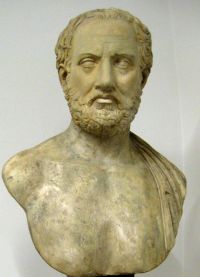
The historical arc of Hong Kong traces a journey from a sanctuary 'beyond the grasp' of authoritarianism to a key instrument of that same grasp . This constitutes a fundamental inversion of its founding promise. The very vocabulary that once defined the city—'freedom,' 'safety,' 'refuge'—has been subjected to a radical redefinition, a process that Thucydides identified as a hallmark of revolutionary change, where words lose their ordinary meaning to take on new, politically imposed ones [25]. The historical flight from the 'grasping Mandarins' has culminated in a paradoxical reunion, where the city itself has become a conduit for a modern iteration of that same power .
The closing of this haven carries implications that resonate far beyond its borders. When a place of refuge ceases to exist, it represents not only a tragedy for those who seek it but also a blow to the universal ideal of liberty [26]. This transformation confirms a timeless principle articulated by Dickens: when humanity is crushed under the hammers of oppression, it will inevitably twist itself into tortured forms, yielding the bitter fruit of its political seeding [27]. The loss of Hong Kong as a sanctuary signifies a shrinking of the world's free spaces, moving closer to a reality where no refuge remains from the reach of absolute power, and escape itself becomes a futile endeavor .
The journey of Hong Kong from a bastion of liberty to an apparatus of control represents a profound ideological reversal. Its foundational identity, built upon the promise of safety from the 'grasping Mandarins' of the mainland, has been systematically dismantled and repurposed . The city's legal and economic structures, once seen as shields for individuals, are now being wielded as weapons of a transnational repressive agenda . This transformation is not merely a political shift but a redefinition of the city's very soul, echoing a historical process where words change their meaning and entities assume the traits of their opposites under immense pressure .
Ultimately, the paradox of Hong Kong serves as a global cautionary tale. The erosion of a sanctuary has far-reaching consequences, affirming the stark reality that when a place of escape is lost, the world becomes smaller and more perilous for everyone . It illustrates the grim axiom that oppressive systems, whether historical or contemporary, consistently produce outcomes that deform the human experience . As the spaces for refuge diminish, the struggle to escape the grasp of unchecked power becomes increasingly desperate, echoing the lament that it is, and always has been, 'vainly men escape from men' .