AI-generated from sources
The monstrous womb and the breakdown of order: Familial passion as the epicenter of chaos in Ovid’s Metamorphoses
In Brief
- Ovid posits that intense passion, when directed toward family members (incest, betrayal), acts as an elemental force that overrides all moral and social duties.
- The consequence of familial transgression is the perversion of natural cycles, most notably transforming motherhood into a source of monstrous creation and destruction, exemplified by Myrrha and Althaea.
- Narratives of corrupted kinship, like the self-destructive pride of Niobe, serve as microcosms for cosmic disorder, reflecting the erosion of boundaries between human and beast.
- Metamorphosis is presented as the ultimate, logical outcome of these moral failures, physically manifesting the collapse of identity caused by ungovernable passion.
Main authors
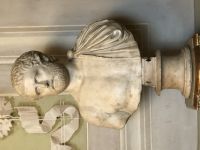
Ovid’s Metamorphoses has exerted an immeasurable influence on Western literature, serving as a primary source for mythological storytelling through the ages [1]. Yet, beyond its brilliant catalog of legends, the work presents a profound and unsettling exploration of human passion. It posits a world where the most intense emotions serve as catalysts for chaos, particularly when they erupt within the sanctified boundaries of the family. These powerful bonds—filial, maternal, and fraternal—become conduits for transgression, driving individuals to violate sacred customs, natural laws, and divine order [2]. When love turns to lust, pride to hubris, or grief to vengeance, the foundational structures of society and nature itself begin to warp and dissolve.
This exploration delves into the paradox of how the very ties meant to ensure stability and continuity become vectors for corruption and destruction. Ovid demonstrates that when familial passions become ungovernable, they lead to catastrophic outcomes: heinous betrayal, monstrous births, and dark metamorphoses that signify a complete collapse of identity [3, 4]. The natural cycle of life, death, and regeneration is violently perverted, and the human form itself proves unstable, its transformation reflecting a deep-seated moral and ontological crisis [5]. Through these narratives of familial transgression, Ovid examines the terrifying fragility of the order that separates humanity from beast and civilization from chaos.
The Corruption of Filial Piety: Passionate Betrayal and Incestuous Desire
A recurring motif in Ovid's work is the daughter whose romantic passion compels her to betray her father, family, and homeland, constituting a radical violation of filial piety. The story of Scylla provides a stark archetype of this transgression. Consumed by her love for the invading King Minos, she does not hesitate to betray her own father, King Nisus, by severing the purple lock of hair upon which his life and the safety of his kingdom depend . Her declaration, “To wicked deeds love sways,” encapsulates the Ovidian view of passion as a force that overrides all moral and social obligations. Only after her crime, when she is rejected by the very man for whom she sacrificed everything, does Scylla fully grasp the gravity of her actions, acknowledging that she deserves to be destroyed by those she has impiously ruined [6].
This theme of rationalized betrayal is also central to the character of Medea. Faced with the choice between loyalty to her family and her burgeoning love for the foreigner Jason, she agonizes over leaving her father, brother, and native soil [7]. However, she ultimately justifies her decision by casting her father as cruel and her country as barbarous, framing her submission to Jason as yielding to the will of the “greatest of the Gods” who possesses her . In these narratives, love is not merely an emotion but an irresistible, almost divine, force that provides a pretext for abandoning the most fundamental duties.
The ultimate perversion of filial devotion, however, manifests in the theme of incest, where natural affection corrupts into unnatural lust. In the tale of Myrrha, Ovid masterfully depicts the psychological torment of a daughter consumed by a criminal passion for her own father [8, 9]. Myrrha is acutely aware that her desire violates divine and parental laws, yet she desperately attempts to rationalize it by observing the animal kingdom, where such unions are common . She laments the “malignant ordinances” of human society that forbid what “Nature permits,” revealing a profound conflict between innate impulse and sacred law [10]. This internal debate highlights a key Ovidian tension: the struggle between the chaotic, seemingly “natural” urges of passion and the rigid structures required to maintain human order.
The Monstrous Womb: Perverted Maternity and Unnatural Birth
The consequences of transgressing familial bonds are most gruesomely illustrated in the corruption of motherhood and the perversion of birth. Myrrha’s incestuous act results not only in her own transformation but in a grotesque parody of childbirth. Metamorphosed into a myrrh tree to escape her guilt, she gives birth to Adonis from beneath her bark . This birth is a deeply unnatural event; the infant, “conceived in guilt,” must seek his own passage from the wood, while the mother-tree’s distended womb swells without a voice to invoke the goddess of childbirth . This disturbing imagery powerfully connects forbidden passion directly to monstrous creation, where the vessel of life is twisted into something alien and horrifying.
This unnatural gestation stands in stark contrast to Ovid's other accounts of creation, which, though mythical, adhere to an internal logic of natural order. After the great flood, humanity is reborn from stones thrown over the shoulders of Deucalion and Pyrrha, with the earth functioning as the “great mother” [11]. Similarly, armed warriors spring fully formed from the “pregnant bowels” of the earth after dragon's teeth are sown in a field [12]. Even the chaotic mixture of mud and heat after the Nile recedes produces life in a recognizable, if imperfect, process [13]. These narratives establish a baseline for creation that Myrrha's story violently subverts. Her fate demonstrates that when the sacred laws of kinship are violated, the natural process of generation is rendered monstrous.
Maternal instinct itself can also become a transgressive force. The tale of Althaea exemplifies this paradox, as her fierce loyalty to her slain brothers compels her to murder her own son, Meleager, by burning the log to which his life is tied [14]. In this act, she becomes “pious in impiety,” fulfilling one familial duty by committing the ultimate maternal betrayal. Her cry, “to crime must crime be added, death to death,” shows a conscious decision to choose one bloodline over another, turning the life-giving mother into a ritualistic life-taker . This action inverts the archetype of the protective mother, whose love is typically characterized by a blind, self-sacrificial willingness to face any danger for her child [15, 16].
The Overwhelming Torrent of Passion
Throughout these tales, Ovid portrays passion not as a moral failing but as an elemental, ungovernable force that sweeps away reason, duty, and identity [17, 18]. Characters often feel they are not choosing their destructive paths but are being driven down them by a power beyond their control. Myrrha’s love is described as the work of an “infernal” Fury that shot “venom’d vipers” in her veins, absolving Cupid of the crime [19]. Likewise, Byblis, consumed by love for her brother, frames her passion as an impulse where lovers, like gods, should know no bounds and act at their will [20]. This depiction of passion as an external affliction or a divine mandate serves to illustrate its chaotic and amoral nature, an irresistible force that can overwhelm even the noblest desires and affections .
This overwhelming power is not confined to incestuous or romantic love. Maternal pride, when it becomes a passion, proves equally destructive. Niobe’s arrogant boasting of her fourteen children, whom she places above the divine offspring of the goddess Latona, is an act of hubris born from excessive maternal pride [21]. Her passion leads directly to the annihilation of her children, transforming her happiness into a cautionary tale about the need to await a person’s final day before judging their fortune [22, 23]. Similarly, the profound grief of Hecuba, once a great queen, devolves into a singular passion for vengeance after her children are slain and sacrificed [24]. Her womb, once a source of royal heirs, has been perverted into producing “funeral victims,” demonstrating how even the most natural of parental affections can become a source of horror.
Ultimately, the social chaos wrought by these transgressive familial passions mirrors the cosmic disorder that Ovid depicts in nature. During the great flood, all natural boundaries are erased as the wolf swims among the sheep and wandering birds fall exhausted into the waves [25, 26]. This imagery of a world returned to primordial chaos reflects the internal state of individuals whose passions have broken down the sacred barriers of kinship. The violation of familial law is thus presented as a microcosm of a larger, ever-present threat: the potential for all order, natural and social, to be undone by the violent and unpredictable torrent of emotion.
In Ovid’s complex narrative world, the family is not a haven from the storm of passion but its very epicenter [27]. It is a crucible where love and duty are forged, but also where they are most prone to being twisted into monstrous forms. Filial affection, when warped by incestuous desire or romantic obsession, leads to the ultimate betrayals of kin, country, and the gods . Maternal instinct, a force celebrated for its selfless devotion, can curdle into destructive pride or vengeful fury, subverting the act of creation itself . Ovid relentlessly shows that the passions arising from these most intimate bonds are the most dangerous because they strike at the very foundation of the natural and social order.
The ultimate consequence of these transgressions is metamorphosis. The physical transformations that conclude many of these tales are not arbitrary punishments but the logical outcomes of a moral and psychological collapse . Myrrha becoming a weeping tree, Scylla a bird, and Actaeon a stag are all physical manifestations of their internal states—a loss of humanity that stems directly from the violation of fundamental laws . Ovid suggests that the rules governing kinship are as essential as the distinctions between human and animal. When these sacred lines are crossed, the transgressor is irrevocably changed, their new form a lasting monument to the chaos unleashed when familial passion corrupts the natural order .