AI-generated from sources
The necessary tension: elected will versus aristocratic revision in bicameral systems
In Brief
- The constitutional conflict between the elected Commons and the unelected Lords stems from the tension between popular mandate and the need for insulated, deliberative revision.
- Proponents view the upper house as a vital check against legislative tyranny and hasty laws (Jefferson, Madison), while critics see it as an obstructionist bastion of elite self-interest.
- Historical practice demonstrates that the House of Lords must ultimately yield to the "virtual supremacy of the House of Commons" when supported by the clear, settled opinion of the nation (Bagehot).
- The legitimacy and survival of the Lords depend on its self-restraint, acting as a chamber of delay and refinement rather than outright defiance of the democratic will.
Main authors
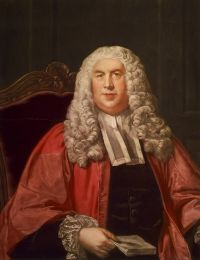


In bicameral systems founded on both democratic and aristocratic principles, an inherent tension exists between the elected lower house and the unelected or appointed upper house [1]. This structure forces a perpetual debate over the legitimacy and function of the second chamber. At its core, the conflict is between the immediate authority derived from a popular mandate and the moderating influence of an insulated, deliberative body [2]. The very existence of a House of Lords, or a similar institution, rests on the premise that it serves as a vital check on the power of the Commons, preventing the state from being overwhelmed by a "popular torrent" that could level all distinctions and privileges .
This constitutional arrangement gives rise to two fundamentally opposed interpretations. On one hand, the upper chamber is seen as a necessary safeguard against the potential "tyranny of the legislatures" [3] and the volatile passions of a popular majority, ensuring that the rights of minorities are not endangered [4]. In this view, its power to delay and revise legislation is a virtue, providing a crucial check on hasty or ill-conceived laws [5]. On the other hand, it is often condemned as an anachronistic and undemocratic bastion of elite interest, using its power to obstruct the will of the people for its own benefit [6, 7]. This raises the central question: does the unelected chamber function as a responsible guardian of the constitution, or as an unaccountable impediment to democratic progress?
The Chamber of Revision: A Bulwark Against Legislative Tyranny
The classical defense of an unelected upper chamber is rooted in the idea that it provides a necessary counterbalance to the democratic impulses of the lower house. William Blackstone argued that a separate and independent branch for the nobility is expedient for the state, as their privileges would otherwise be "borne down and overwhelmed" by the sheer force of popular will . This perspective views society not as a homogenous mass but as a collection of distinct interests, with the peerage requiring structural protection from what is perceived as the natural envy of the populace [8]. The chamber thus becomes a sanctuary for a particular class, whose preservation is deemed essential for the stability of the entire political structure.
Beyond the protection of its own members, the upper house is justified as a guardian of the entire nation against the potential excesses of a sovereign Commons. Theorists like James Madison warned that in any system where a majority is united by a common passion, the rights of the minority are in jeopardy . This fear extends to the legislative body itself, which Thomas Jefferson identified as a formidable potential source of tyranny . From this perspective, the ideal form of government is one where a majority is "held in restraint by constitutional checks and limitations" . The House of Lords, in its capacity to review and amend legislation, is designed to be one of these essential restraints, promoting deliberation over passion.
Proponents argue that this restraining function does not equate to outright opposition to the popular will, but rather to its refinement. The act of delaying a bill passed by the Commons can be framed as a service to the electorate itself. Conservative thinkers have contended that in resisting the lower chamber, they are in fact protecting the people from a body of their own election which may not be acting in their true best interests [9]. This provides a critical pause, allowing for deeper public reflection and ensuring that the final decision aligns with the considered and settled opinion of the nation, not just a momentary political impulse [10].
An Obstructionist House: The Clash with the Popular Mandate
Conversely, the historical record is replete with instances where the House of Lords has been perceived not as a chamber of revision, but as a purely obstructionist force. When peers have rejected bills enjoying widespread popular support, they have frequently provoked intense public fury . Such actions are often depicted as a direct challenge to the "might, and insult the majesty of the people" [11], transforming a constitutional debate into a direct confrontation between the aristocracy and the nation. In these moments of crisis, the very existence of the upper chamber has been called into question, with widespread demands for its abolition .
The motivations behind such obstruction are often viewed with suspicion. Critics point to cases where the peers' opposition appears to stem less from high constitutional principle and more from narrow self-interest, such as protecting their estates from the financial impact of a new poor-rate . This tendency is compounded by a jealousy of their exclusive privileges, which can fuel contention between the two Houses independent of the merits of the legislation under review [12]. When the revising chamber acts primarily to preserve its own economic or social advantages, its claim to be a neutral arbiter of the public good is severely undermined.
This conflict is sharpened by evolving theories of representation. While some decry the modern member of the Commons as a mere "tied delegate," shackled to election pledges and party discipline, others see this as the legitimate expression of a democratic mandate [13]. From this latter viewpoint, for an unelected body to frustrate the will of representatives who are directly accountable to the populace is fundamentally undemocratic. The fear that members of Commons will become servile to the "rabble" [14] is countered by the principle that the elected chamber must reflect the will of its constituents, making any veto by an unaccountable house an act of tyranny.
An Uneasy Coexistence: Reform and the Supremacy of the Commons
Despite the theoretical equality of the legislative branches, practice has revealed a clear, albeit often contested, hierarchy. During major legislative battles, prime ministers have found it politically impossible to accept amendments from the Lords that alter the fundamental principles of a bill passed by the Commons [15, 16]. This dynamic underscores a widely accepted reality: the "virtual supremacy of the House of Commons" [17]. The upper house may amend and delay, but on matters of core political conviction backed by an electoral mandate, its ability to resist is limited.
This power dynamic is the result of a long historical evolution. The peerage, originally a check on monarchical power, was preserved by kings to serve as a counterweight to the increasingly formidable Commons [18]. This led to direct and dramatic confrontations, culminating in historical moments like the seventeenth-century declaration by the Commons that the House of Peers was "useless and dangerous, and ought to be abolished" [19]. While this abolition was temporary, it established a clear precedent for the ultimate sovereignty of the elected chamber in any existential struggle.
In response to this persistent tension, various reforms have been proposed to make the House of Lords a more effective and palatable institution. Suggestions have included the abolition of proxy voting to ensure it functions as a genuine deliberative assembly, and the introduction of life peers to inject merit and expertise into its ranks [20, 21]. Such reforms aim to strengthen the Lords' capacity for legislative scrutiny without challenging the Commons' ultimate authority [22]. The underlying Radical objection to these changes—that they might make the Lords a more formidable opponent to the Commons—reveals the core of the dilemma: a more legitimate second chamber may also be a more powerful one [23].
Conclusion
The fraught relationship between the elected Commons and the unelected Lords is managed through a pragmatic, unwritten understanding of constitutional limits. The legitimacy of the House of Lords in the modern era depends on its acceptance of a subordinate role. Its primary function is one of revision and delay, not of ultimate legislative authority . As Walter Bagehot outlined, the crucial test is whether the upper chamber can discern when the opinion of the Commons is also the settled and determined opinion of the nation . In such cases, continued resistance is not only politically untenable but existentially dangerous for the institution itself.
Ultimately, the survival of the unelected chamber depends on its own prudence. Its members, particularly the most capable, recognize that systematic opposition to the Commons is the one action that could provoke a political storm sufficient to sweep away the hereditary principle entirely [24, 25]. The true sovereign of a free people is a majority constrained by constitutional checks, and the House of Lords serves as one such check . However, it is a check that must itself be checked by the unassailable power of a clear and sustained national mandate. It must bend, so that it does not break.
The inherent tension between the mandate of the elected and the privilege of the unelected defines the modern bicameral system. The House of Lords can claim a legitimate constitutional role as a chamber of revision, a vital brake on the potential for legislative tyranny and the unchecked passions of a transient majority . It offers a space for sober second thought, a function defended as a service not only to the state but to the people themselves, protecting them from their own potentially flawed representatives . This is the virtue of delay—a mechanism designed to ensure that law is the product of deliberation, not just will.
However, this virtue is perpetually shadowed by the accusation of tyranny—the tyranny of an entrenched elite using its power to obstruct popular reform and protect its own interests . The historical record demonstrates that the Lords' power is conditional. It must ultimately yield when the Commons' position is unequivocally backed by the nation . Its survival has depended on an implicit understanding that its purpose is to refine and question, but not to defy, the sustained democratic will. Therefore, the unelected peers are not destined to always bow to the Commons, but they must do so when the voice of the Commons is clearly indistinguishable from the voice of the people.