AI-generated from sources
The paradox of perpetuity: Labor, delight, and the fleeting life of the christmas tree
In Brief
- The Christmas tree functions as a paradox, symbolizing 'perpetual spring' and enduring life while physically existing as an object destined for immediate decay.
- The seasonal delight of the tree is built upon extensive, often invisible human labor and long-term investment, transforming this toil into a virtuous and noble pursuit.
- Authors like Dickens and Emerson use the tree to anchor deep, lasting memories, arguing that the true value lies not in the physical object but in the spiritual reality it catalyzes.
- Its transient nature amplifies its meaning, suggesting that the most meaningful joys are potent precisely because they contrast with life’s ordinary toil and are not permanent.
Main authors
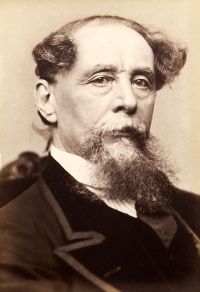

The Christmas tree stands as a central paradox in modern cultural tradition. It is at once a symbol of permanence and an object of fleeting beauty. As an evergreen, it evokes a sense of enduring life, a representation of a 'perpetual spring' that defies the winter season [1, 2]. This symbolism connects it to timeless concepts of home, memory, and spiritual renewal, making it a fixture of domestic stability and festive magic [3, 4]. It is meant to conjure a world of effortless delight, a focal point for joy and celebration [5].
However, this powerful symbolism is built upon a foundation of transience and toil. The tree itself is a natural product, cultivated over years only to be cut down for a brief period of admiration [6]. Its journey from a wild or managed forest to a decorated parlor involves human labor, an element often invisible behind the glittering facade [7]. This creates a fundamental tension: the tree as an emblem of everlasting life is, in reality, a dying object. Its role in providing 'perpetual delights' [8] is intrinsically linked to its own ephemerality, mirroring the transient nature of joy itself [9]. Understanding the Christmas tree requires exploring this interplay between its enduring symbolic meaning and its temporary, labor-dependent existence.
An Evergreen Symbol of Enduring Life
The symbolic power of the Christmas tree is deeply rooted in its natural qualities as an evergreen. Historically, the fir tree was associated with the pagan goddess of spring before its symbolism was adapted into Christian tradition, where it came to represent eternal life and the concept of Christ as the 'resurrection and the life' . Its ability to remain green throughout the year transforms it into a powerful emblem of nature's constancy and a promise of renewal, a tangible vision of a 'perpetual spring' where life is always flourishing [10]. This inherent symbolism allows the natural object to transcend its physical form and represent spiritual truths [11].
This connection to permanence extends into the secular and domestic spheres. For Charles Dickens, the tree is a vessel for childhood memories and a powerful anchor for the idea of 'coming home' . It acts as a recurring feature in the landscape of memory, a symbol around which familial bonds and traditions are forged. The tree becomes more than just a plant; it evolves into a representation of enduring love and connection, a symbol that can outlast the individuals who celebrate it [12]. In this context, the evergreen is not just a defiance of winter but a symbol of the persistence of love and home against the trials of life [13].
The decoration of the tree further deepens its symbolic weight. The addition of lights serves to illustrate the idea of Christ as the 'light of the world,' while the giving of gifts is meant to echo the divine generosity of God . Each ornament and light transforms the natural tree into a constructed symbol, a piece of 'eternal Nature' brought into the home and assimilated into a human narrative [14]. It becomes a focal point where natural beauty and spiritual ideals converge, creating a rich tapestry of meaning that speaks to hopes for permanence, peace, and divine favor [15].
The Unseen Labor Behind Festive Delight
The spectacle of a fully decorated Christmas tree, a source of seemingly spontaneous delight, obscures the processes of nature and labor that produce it. The tradition necessitates the felling of young, beautiful trees, selected specifically for their aesthetic appeal and removed from their natural environment to serve a temporary celebratory purpose . This act of harvesting is the first step in a chain of labor that is fundamental to the holiday experience, yet it remains largely unacknowledged in the final moment of enjoyment.
This dynamic reflects a broader understanding of human existence where labor is the necessary precursor to delight and achievement [16]. Various texts frame toil not as a curse, but as a noble, even sacred, endeavor that gives life meaning and excellence [17]. Labor, whether physical or intellectual, is positioned as a form of worship, the essential activity that separates a meaningful life from idle despair [18]. The satisfaction derived from a 'willing task of love' or the pride in 'harvest craft' elevates simple work into a virtuous practice [19, 20].
The Christmas holiday, centered around the tree, can therefore be seen as a ritualized pause from this essential labor. Dickens refers to it as a 'short holiday' from the 'great boarding-school' of life where we are perpetually working . The ideal of a life as a 'perpetual holiday' is presented as an unrealistic fantasy [21]. Instead, true and heavenly delight is found not in idleness, but in the satisfaction of performing useful work [22, 23]. The Christmas tree's delight is thus amplified by its context as a temporary, cherished reward for a year of toil, a brief period of rest before the resumption of 'perpetual business' [24].
The Beauty of the Ephemeral
While symbolizing perpetuity, the Christmas tree is defined by its own imminent decay. The act of cutting it down, essential for its role in the celebration, begins its rapid decline . This finite lifespan places it in the category of other transient natural beauties, such as ephemeral flowers that blossom and fade, mirroring the fleeting nature of hope and joy in human life . Its brief period of glory serves as a poignant reminder that beauty and life are temporary.
The joy the tree facilitates is similarly transient. The Christmas season represents a momentary reprieve, a structured and temporary period of rest and celebration before life's regular struggles resume . This joy is an intense but fleeting experience, an 'embrace of freedom in a thousand bonds of delight' that is not meant to last . The magic of the moment is heightened by the knowledge of its brevity, making the experience more precious because it is not permanent.
Ultimately, the power of the Christmas tree as a symbol lies in this very paradox. Its physical destruction does not negate the meaning it creates. As the artist Owen Warland discovered, once a beautiful idea is spiritually achieved, the physical 'symbol by which he made it perceptible to mortal senses became of little value' [25]. The tree's value is not in its wood and needles, but in the enduring memories and feelings it evokes . The delight it produces resides not purely in the object itself, but in the harmony between the observer and nature, which 'always wears the colors of the spirit' [26]. The ephemeral object thus serves as a catalyst for a lasting internal experience.
The Christmas tree is a deeply layered cultural artifact, embodying a reconciliation of opposites. It weds the idea of the perpetual with the reality of the ephemeral, and the experience of delight with the necessity of labor. As a symbol, it reaches for eternity, representing an 'eternal spring' , enduring memory , and unending love . Yet, its physical presence is a testament to transience, a product of natural cycles and human work destined for a short and celebrated life .
Its profound cultural resonance stems from this inherent contradiction. The tree suggests that the most meaningful joys are often temporary, made more potent by their fleeting nature and their contrast with the ordinary toil of life . By bringing a dying piece of the seemingly eternal forest into the home, the tradition creates a space where illusions can 'burn into illumination of joy' . The physical tree may wither, but the symbol endures, teaching that the purpose of such ephemeral beauty is to create a spiritual and emotional reality that lasts long after the object itself is gone .