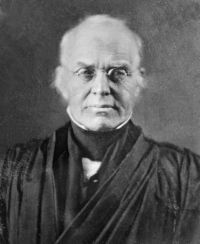
Amos Madden Thayer,  United States National Bank of New York v… (1894 | noyear)

“ Because a man is a member of the board of directors or an officer of a given bank it does not follow, we think, that he must carry his custom elsewhere, and that he must transact his banking business with some other bank. That, in our judgment, would be an unreasonable rule, which no court ought to prescribe. It is doubtless true that a bank officer, who offers paper for discount to the bank with which he is connected, cannot himself represent the bank in such negotiation nor in any other transaction with the bank in which he has a personal adverse interest. ”
Source: Wikisource

Amos Madden Thayer,  United States National Bank of New York v… (1897 | noyear)

“ But we think the weight of reason and authority is in favor of the view that it is within the scope of the implied powers of the president of a bank to indorse negotiable paper in the ordinary transaction of the bank's business, and that a special authority to that end need not be conferred by the board of directors. Such implied power is generally conceded to bank cashiers, and we know of no sufficient reason why the implied powers of the chief executive officer of a bank should be more limited in this respect than those of its cashier. ”
Source: Wikisource

Amos Madden Thayer,  United States National Bank of New York v… (1897 | noyear)

“ It is the duty of banks to make all reasonable efforts to supply their customers with money for all legitimate business purposes. To that end it is their right to exercise all of their corporate powers, including the power to rediscount. On some occasions, if this latter power was not freely and speedily exercised, a bank would be derelict in the discharge of its obligations to the public. ”
Source: Wikisource

Get perspective with Kwize: daily news enlightened by great literature